Would you get a Midget?
――[Midget II]
Subsequently, the Japanese automotive market shifted toward mini four-wheeled trucks, and Daihatsu also launched the Hijet in 1960. However, while many automobile manufacturers ceased sales of mini three-wheeled vehicles, Daihatsu continued to sell the Midget until 1972.
Twenty-one years later, in 1993, Daihatsu exhibited the Midget II as a reference car at the 30th Tokyo Motor Show. This caused quite a stir in the automotive industry.
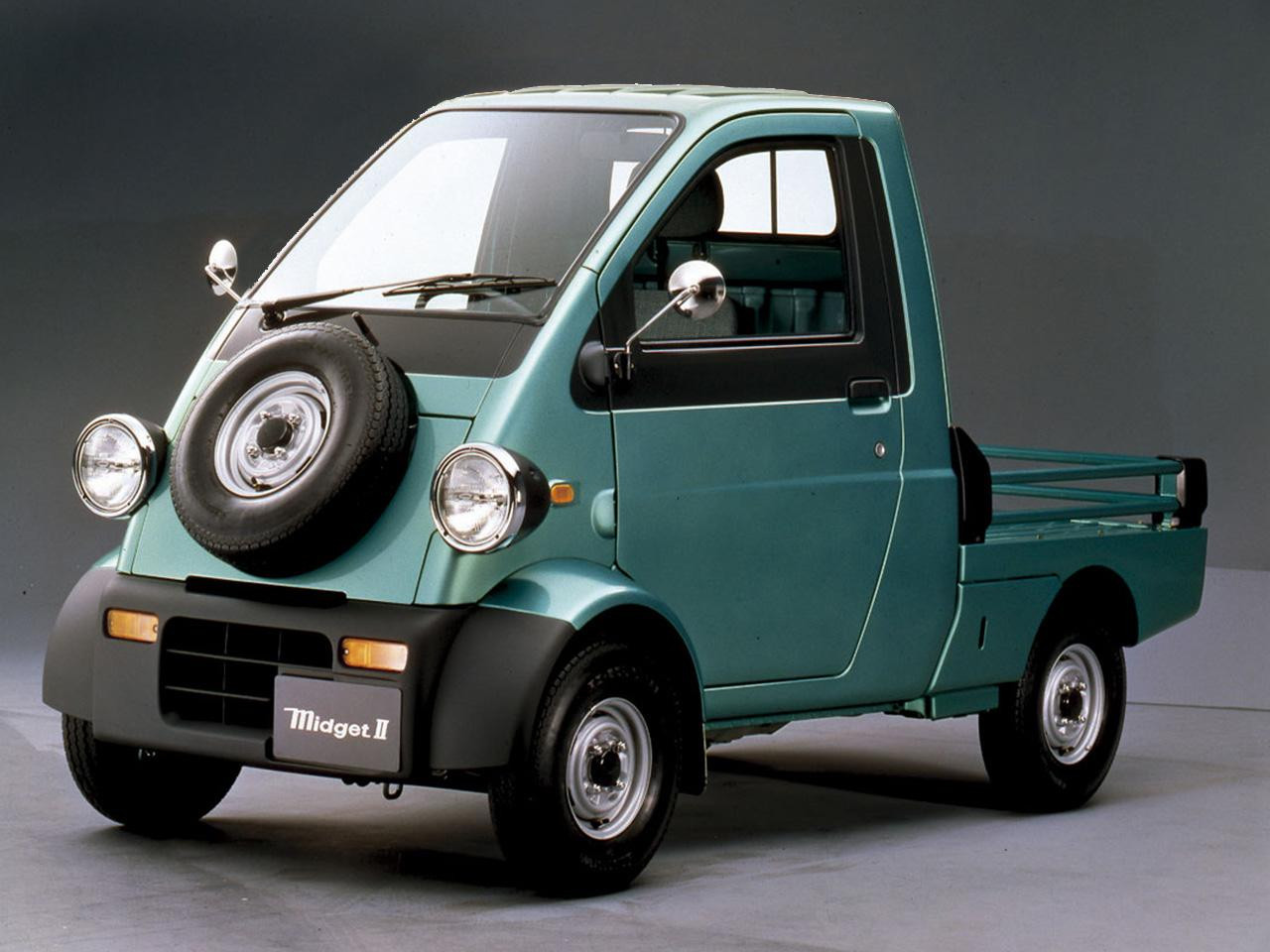
Then, in April 1996, the Midget II was finally launched. Its body size was remarkably compact, even by the standards of mini vehicles at the time. It featured a rounded silhouette, a spare tire mounted on the bonnet, and headlights and fenders that protruded significantly from the body. Its appearance was a unique design that, while reminiscent of the first-generation Midget, also exuded a certain toy-like charm.
The tagline was decided: “Let’s get a Midget.” It was not intended as a primary car for the whole family to travel in, but rather as a secondary car for enjoying short trips. The concept behind it was that it should be cherished not merely as a means of transport, but almost like a pet.
Initially, the Midget II was well received by many users thanks to its cute appearance and easy maneuverability. However, sales of the Midget II came to an end in 2001. Even so, 25 years on, there are still enthusiasts all over the country who remain deeply fond of its unique concept and design.
There are as many Midget IIs as there are owners
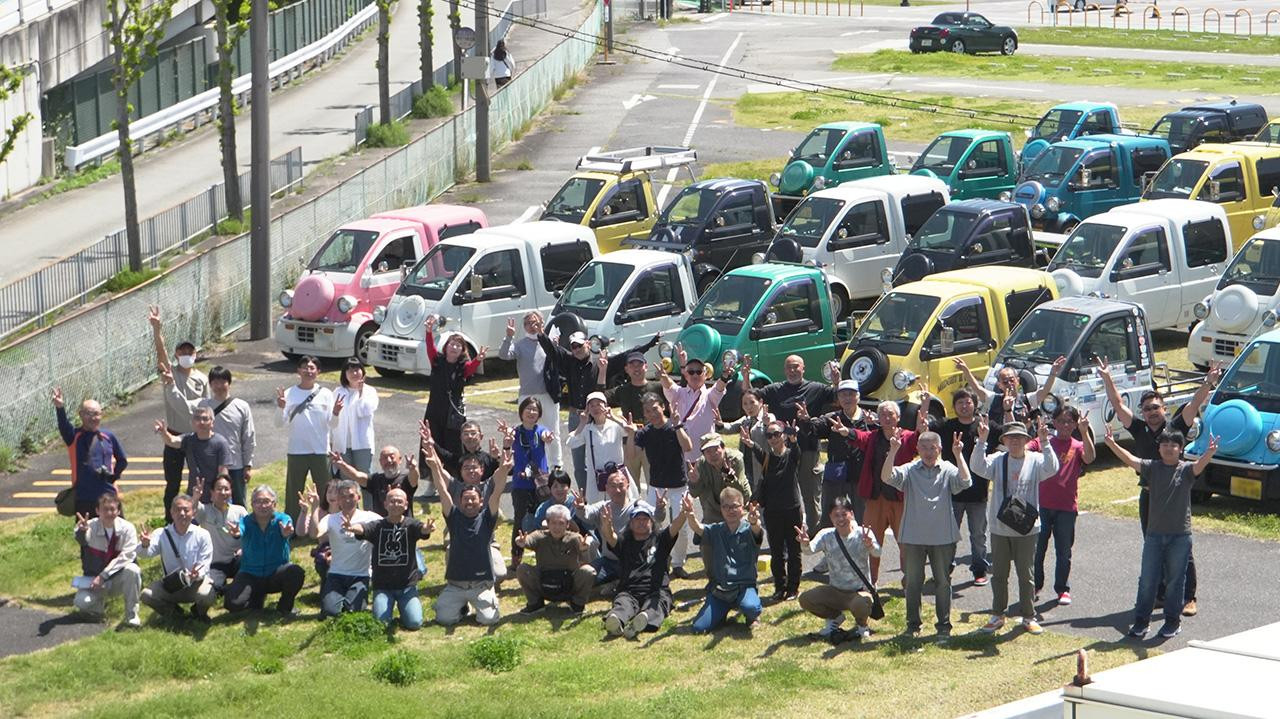
One day in 2026, the organizing committee for a meet-up to celebrate the 30th anniversary of the Midget II’s launch contacted Daihatsu with a request: “We are organizing a meet-up to celebrate the 30th anniversary of the Midget II’s launch and would like to visit Daihatsu’s headquarters.” A total of 33 Midget II owners were set to gather, travelling from as far north as Tochigi Prefecture and as far south as Kochi Prefecture. It has been 25 years since sales ended. Yet why do they continue to love the Midget II to this day? Keen to find out the reason, the TANKENTAI made their way to the meet-up.
Under the blue April sky, a stream of colorful Midget IIs began to gather at Daihatsu’s headquarters. Their charming appearance naturally drew cheers from the TANKENTAI staff. Although they were all supposed to be the same Midget II model, not a single one looked exactly like another. Thanks to the love and care of their respective owners, each Midget II had evolved in its own unique way. There were vehicles with surfboards loaded onto their decks, others fitted out to carry harps, and even some that had been converted into dump trucks. It was a scene that perfectly embodied the saying: “There are as many Midget IIs as there are owners.”
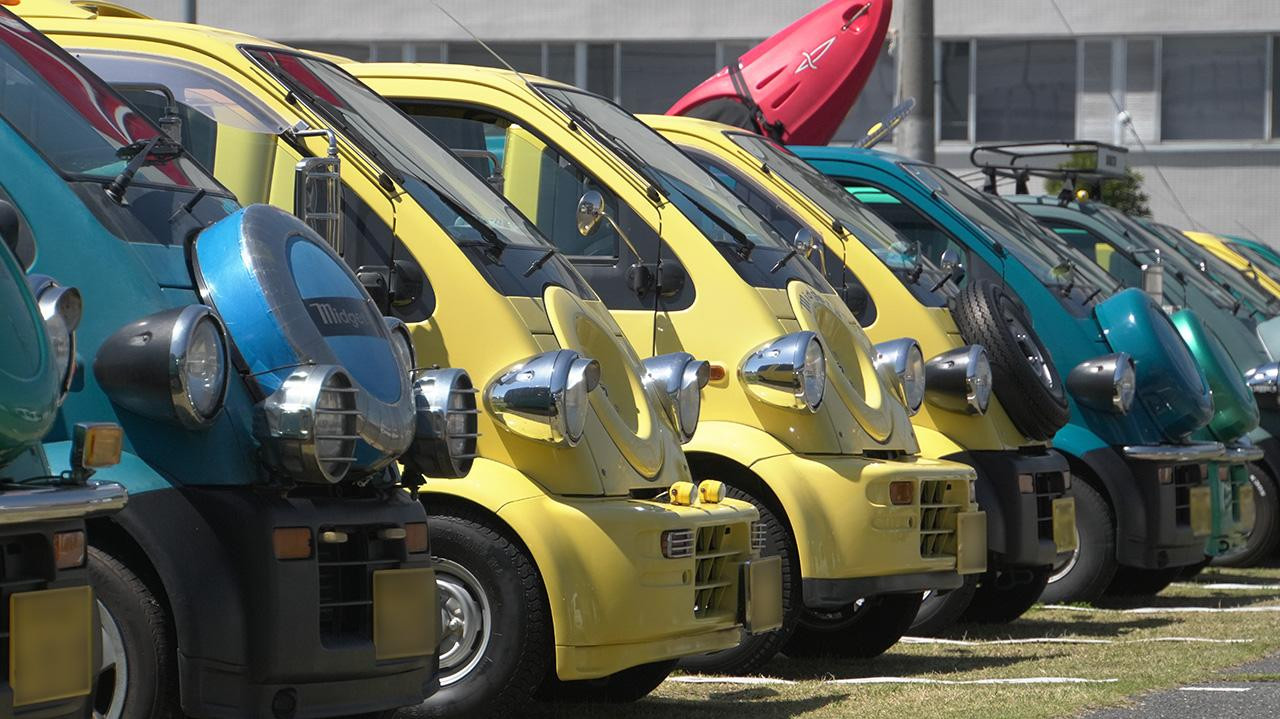
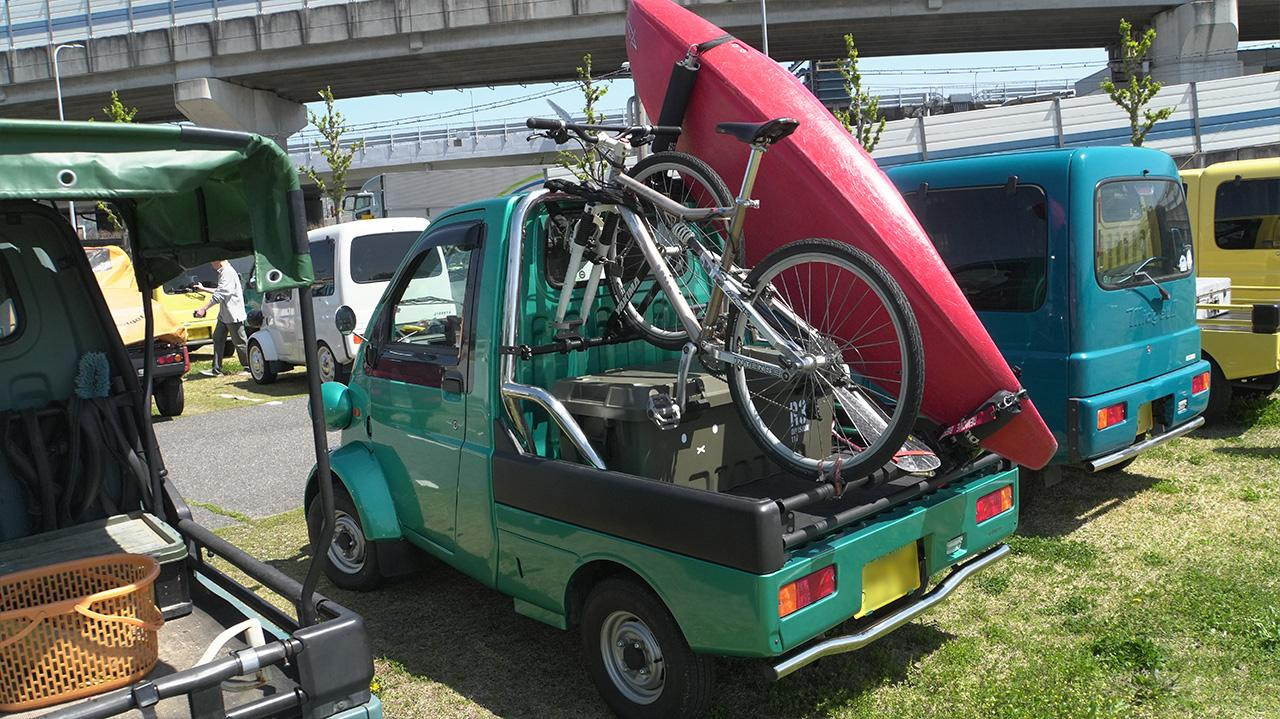
The One-of-a-Kind Midget II
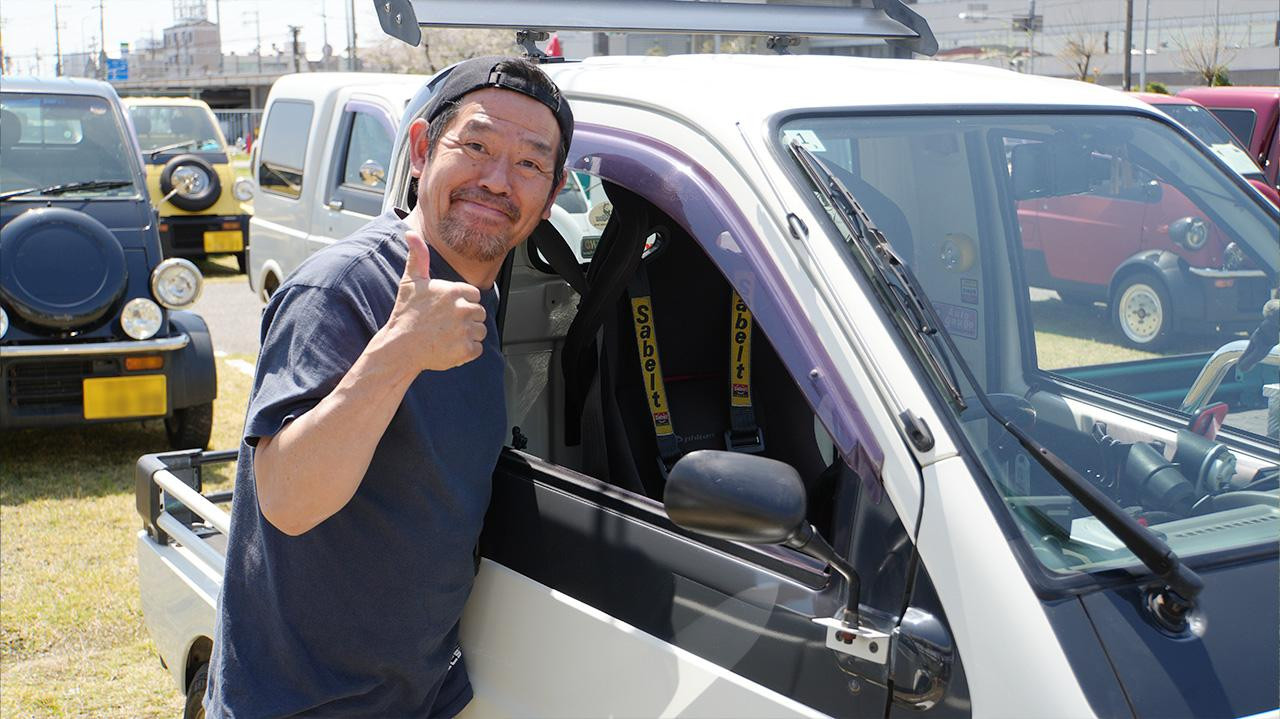
We immediately set about interviewing the Midget II owners. One owner, who had purchased a Midget II for farm work, responded with a smile: “I was looking for a distinctive mini truck when I came across the Midget II. It drives smoothly even on narrow roads, and it can carry more cargo than I expected. It really comes in handy.”
Another owner, who attended with their spouse, said: “I love the cute, rounded design. There’s no other car quite like it. I love that ‘classic Daihatsu’ feel.”
Furthermore, an owner who owns several Midget IIs remarked, “The charm of the Midget lies in the fact that it requires quite a bit of care. As it’s an old car, it does break down occasionally. But I love it for all that. It’s truly one of a kind.” The expression on his face as he spoke was as though he were talking about a long-time family member.
A Growing Community United by the Midget II
We also spoke to an owner who has been a devoted fan of the Midget II for many years. He told us that, as a boy, he was fascinated by the Midgets he saw driving around town, so his parents bought him a Midget model car. However, in 1959, his home was completely destroyed by the Ise Bay Typhoon, and he lost the model car he had cherished so much.
Still, his fascination with the Midget never faded. Then, in 1996, upon hearing the news that the Midget II was to be launched, he thought, “I absolutely must have one,” and immediately decided to purchase one.
Since then, he has forged close ties with Midget fans across the country. On one occasion, following the Great East Japan Earthquake, when he was struggling to find a place to stay, a fellow Midget owner even offered him shelter at their home. “Through the Midget, I’ve met so many friends. I can’t thank the Midget enough. My love for the Midget has remained unchanged since I was a child.”
Every owner has their own memories of the Midget II. It could be a trusted companion for farm work, a secondary car for enjoying days off, or a bridge connecting people. Even now, 25 years after sales ended, the Midget II continues to play an active role in their daily lives.
The Role of Small Mobility in Modern Society
――[Midget X]
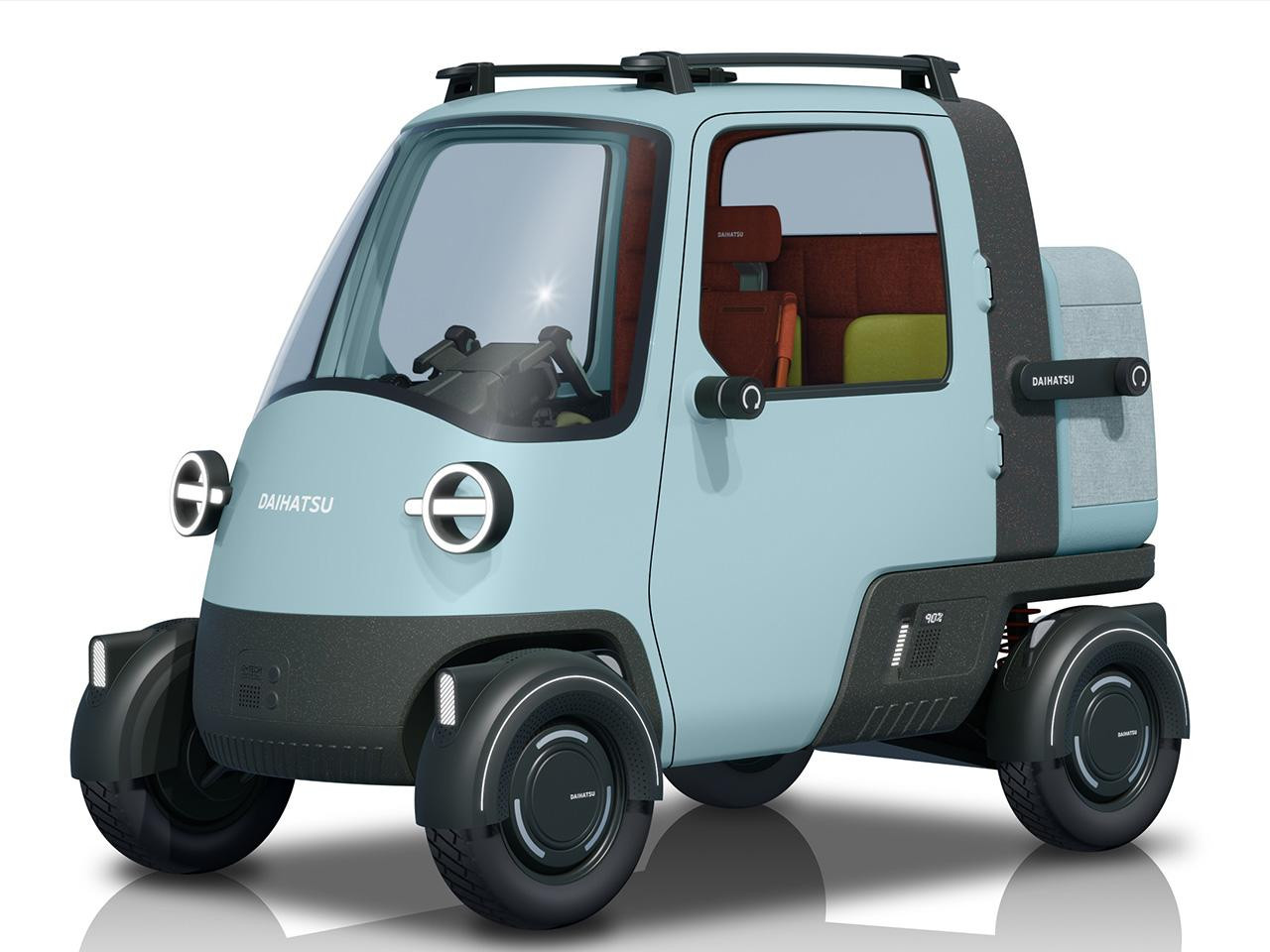
At the Japan Mobility Show 2025 held last October, Daihatsu unveiled its concept car, the Midget X. While other automobile manufacturers were unveiling futuristic concept cars, why did Daihatsu choose to revive the Midget name? To explore the reasons behind this, we spoke to the members of Daihatsu’s Design Div. who were responsible for the Midget X’s design.
This Mobility Show marked the first major event for Daihatsu since its fresh start . At this milestone, the Midget—which could be described as the company’s roots—was identified as the embodiment of what makes Daihatsu unique.
Concept: Mobility Inspired by Daily Life
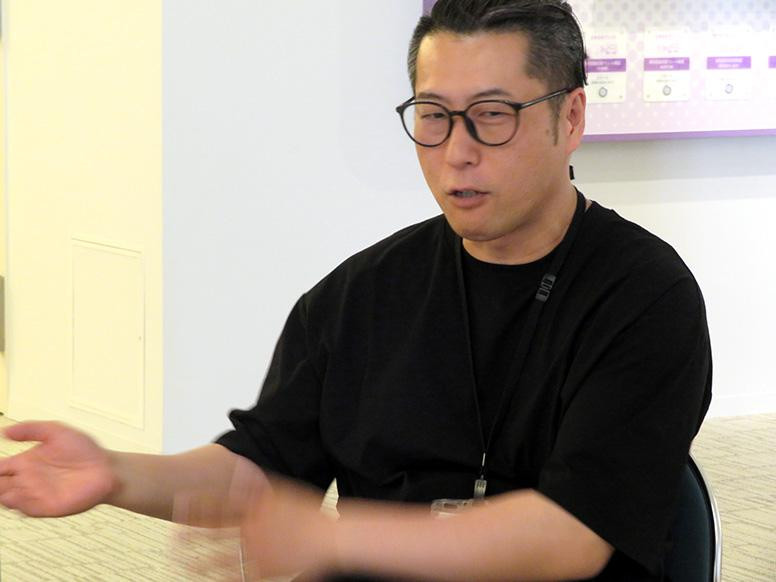
Matsubara-san, who was in charge of design planning, spoke about the project’s starting point: “First of all, we thought very carefully about what role a Midget should play in today’s world.”
The design team focused on the daily lives of parents taking their children to and from nursery school. “Seeing parents cycling with their children seated at the front and back, we felt there was a need for a safer and more convenient mode of transport.
At the same time, some people feel a psychological barrier to the idea of driving a car. That is precisely why we asked ourselves whether it was possible to combine the ease of a bicycle with the sense of security unique to a car. It was from this idea that the direction for the Midget X emerged.”
The embodiment of this idea lies in its three-seater configuration. By setting aside the preconception that it must be a four-seater and re-examining the actual number of passengers required and how the vehicle would be used, they arrived at the everyday travel scenario of “one parent and two children.”
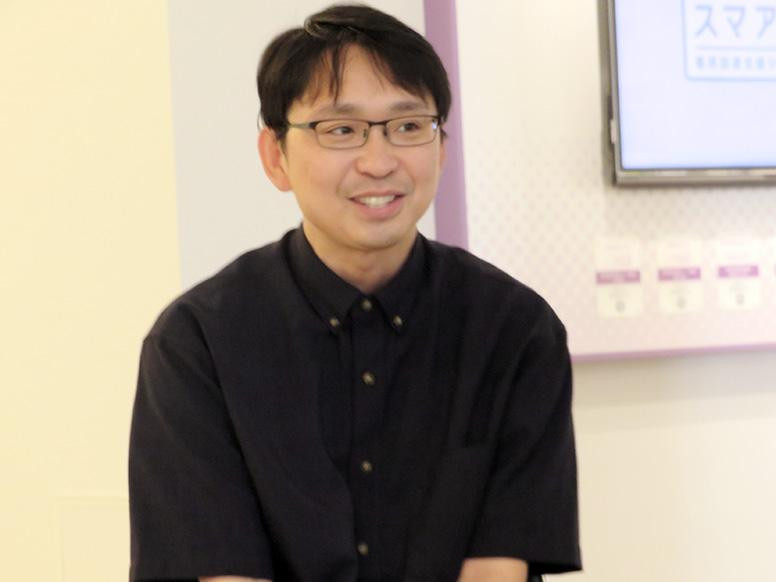
Misaki-san, who was in charge of exterior design, spoke about his design philosophy.
“The front windscreen was designed with a focus on ensuring good visibility while driving. But that’s not all. We’ve incorporated an illustration of the Midget into the corner of the windscreen. It’s a little touch of whimsy that only those in the know will spot.”
Furthermore, rather than the door handles found on most cars, the design adopts a rounded doorknob where you turn it to open it, just like an entrance door. We wanted to create a shape that felt intuitive to interact with, even for those not accustomed to cars.”
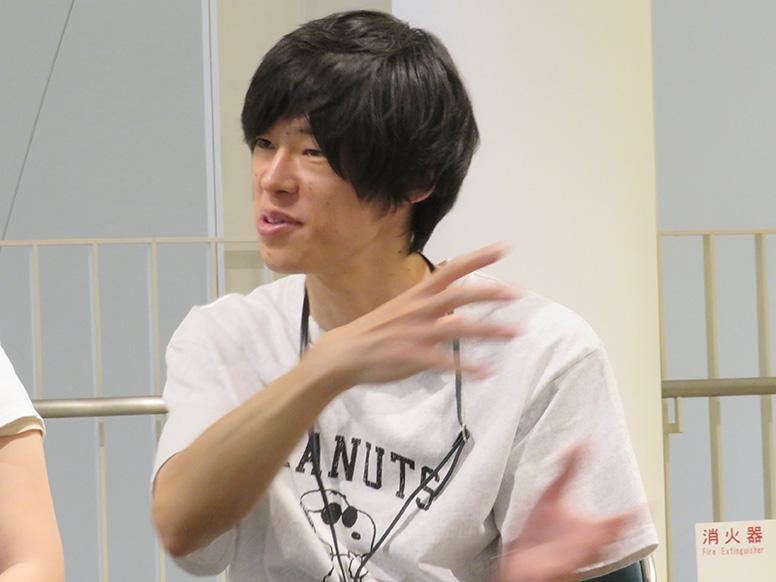
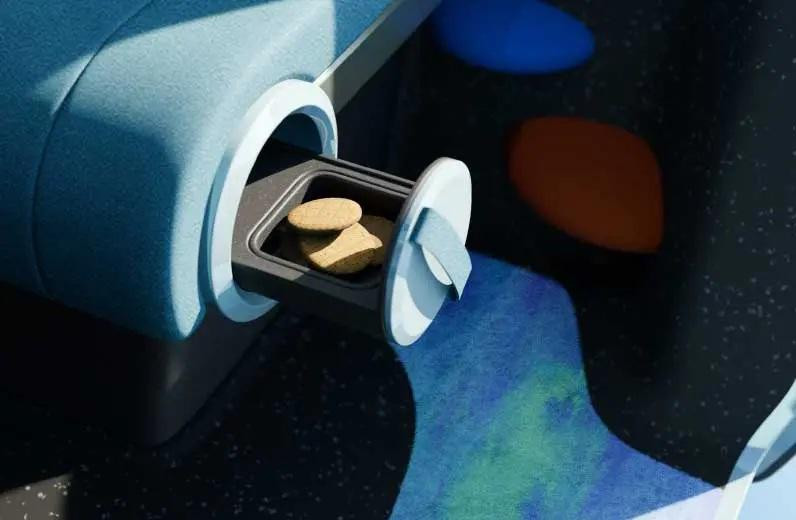
Ohashi-san, who was in charge of interior design, said with a smile, “We’ve fitted a box for sweets next to the driver’s seat. Other manufacturers might have put a charging system there instead. But I think that sort of ‘playful touch that stays close to people’s daily lives’ is what makes Daihatsu so unique.”
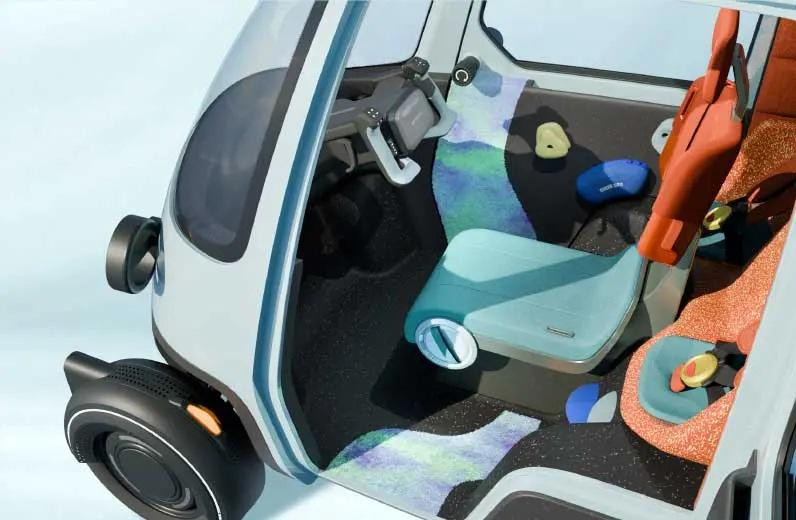
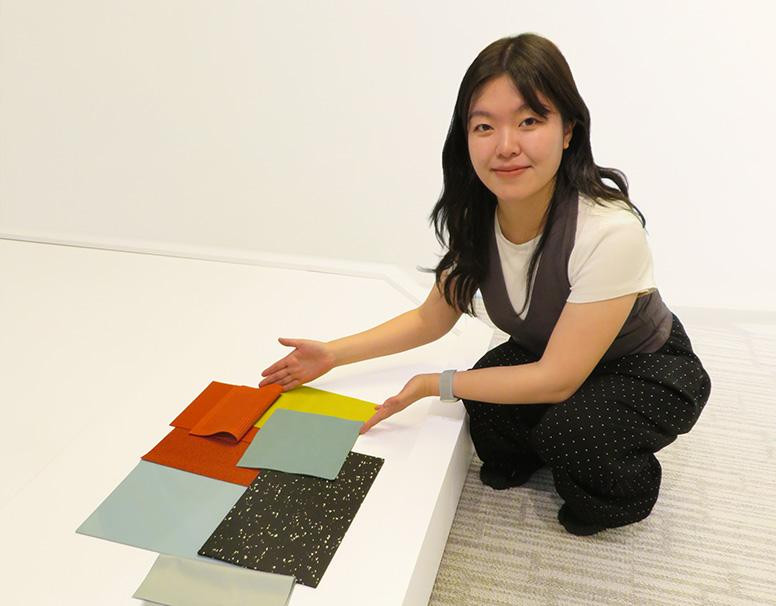
Furthermore, Ito-san, who was in charge of CMF*, commented: “I wanted to create a bright and playful atmosphere. However, I didn’t want it to look cheap to adult eyes. I was very conscious of striking that delicate balance.” She sought to achieve an exquisite balance between a design that is approachable yet blends naturally into everyday life.
*Abbreviation for Color, Material, and Finish
The Midget X is the Future Half a Step Ahead
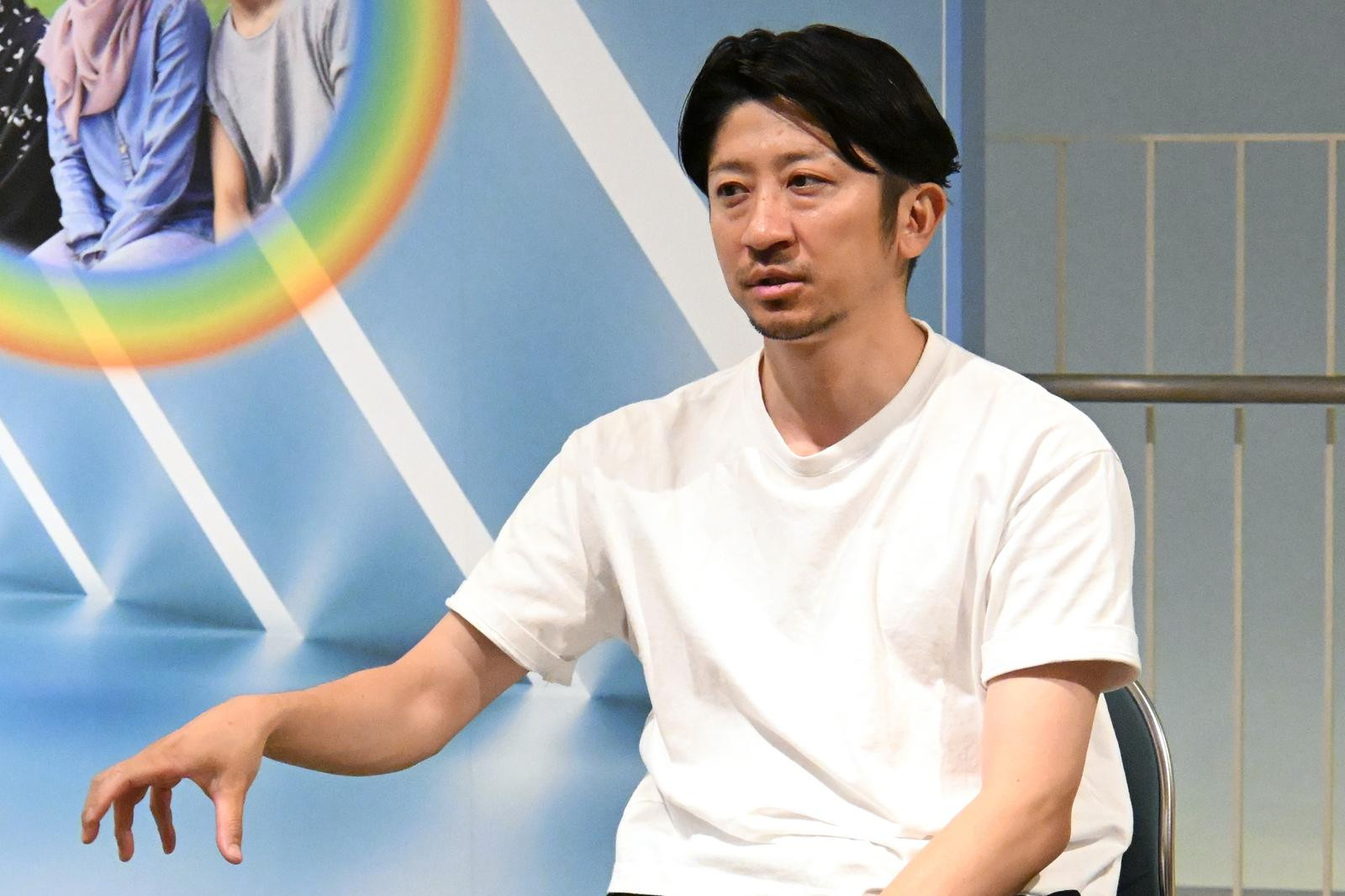
Tanabe-san, who was in charge of the Midget X overall, spoke about the design concept.
“What we aimed for with the Midget X was to create a car that was naturally approachable. We wanted to convey a sense of cutting-edge innovation, but rather than a future a few steps ahead, we focused on a future just half a step ahead.
As we wanted to prioritize the feeling of switching straight over from a bicycle, we deliberately toned down the ‘car-like’ aspects. At the same time, we gave considerable thought to ensuring a sense of security and protection so that parents would feel at ease when traveling with their children.”
Tanabe-san also shared these thoughts: “I believe Daihatsu is a brand that allows for cars that are not typical. I wanted to emphasize that feeling that brings a smile to your face the moment you see it—something that other companies don’t do.”
At those words, the designers around him naturally broke into smiles.
It was clear that the team seriously considered how to “stay close to people’s lives,” while at the same time never forgetting to make people smile, and this atmosphere was reflected in the Midget X itself.
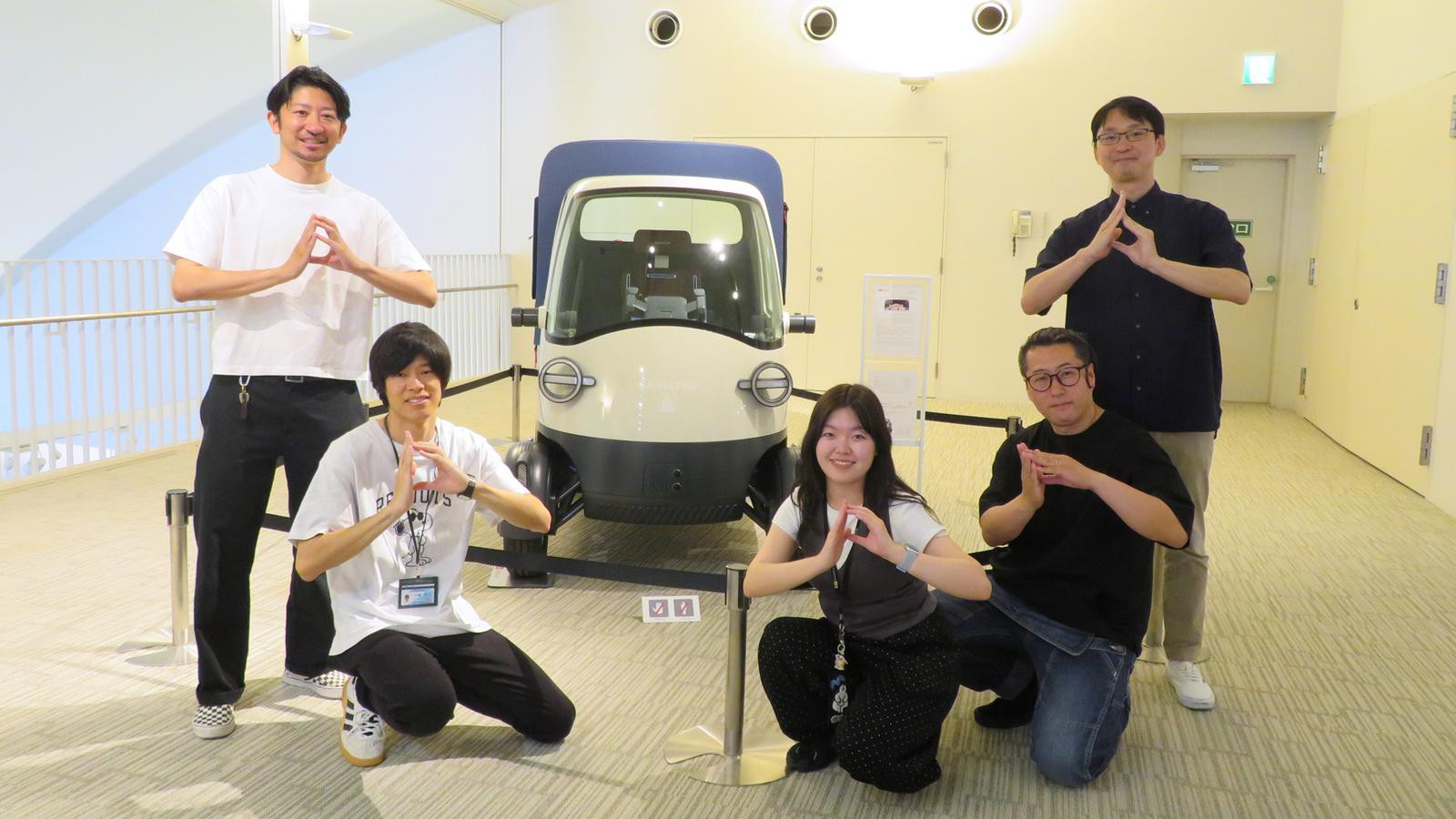
From the Midget to the Midget II to the Midget X
: the DNA of Challenge Carried on by Daihatsu
From the first-generation Midget to the Midget II to the Midget X.
Although each model emerged in a different era, the philosophy of “a small car that stays close to people’s lives” has been passed down unchanged.
During the period of rapid economic growth, it served as a means of transport for work.
In the 1990s, it was the car you wanted to get.
And today, it is a form of mobility that meets diverse needs.
The Midget has continued to run alongside people’s lives, changing its form and role along the way.
“Who is facing difficulties and in what situations?”
It is perhaps because the Midget has continually addressed this question that, even now, 70 years on, it remains etched in the memories of so many people.

Related links
The people in this article

Captain of the Daihatsu TANKENTAI
Wakabayashi (“Three Pledges” and Reform Advancement Div.)

Member of the Daihatsu TANKENTAI
Sakuragi (Digital Transformation Promotion Div.)

Member of the Daihatsu TANKENTAI
Saito (Value Chain Business Div.)

Member of the Daihatsu TANKENTAI
Wakabayashi (Vehicle Structure & Function Development Div.)
Member of the Daihatsu TANKENTAI
Tanaka (Power Train Production Engineering Div.)
Member of the Daihatsu TANKENTAI
Fujiwara (TAR Production Engineering Div.)

Member of the Daihatsu TANKENTAI
Ema (Distribution Planning Div.)
Member of the Daihatsu TANKENTAI
Kawakita (General Affairs Dep.)

Member of the Daihatsu TANKENTAI
Ishida (Corporate Management Div.)

Member of the Daihatsu TANKENTAI
Uegaito (Corporate Management Div.)