Hello, this is the Daihatsu TANKENTAI!
For the third installment of articles written by our in-house team members, we are featuring the Midget, which will celebrate its 70th anniversary next year.
"The Midget is like family."
These were the words of Kon Omura-san, who appeared in the first-generation Midget commercial. As he gently stroked the hood of the Midget, which he had not seen for a long time, he narrowed his eyes with a look of nostalgia.
In this article, we will focus on interviews with Kon Omura-san and other key figures to explore the appeal of the Midget, a car that has continued to stay close to people’s lives.
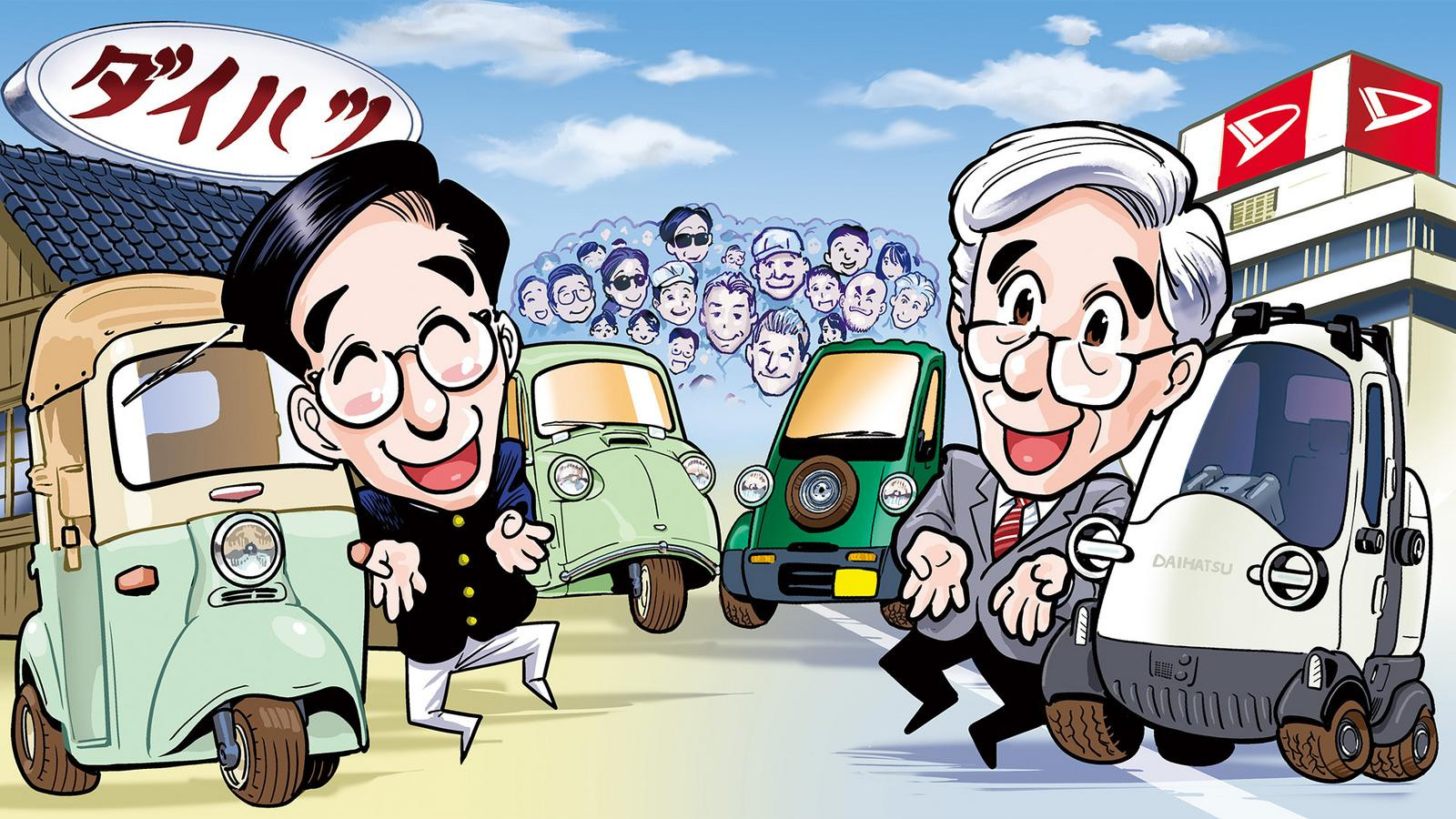
The Daihatsu Midget was the backbone of Japan during its period of rapid economic growth. In an era when cars were still a luxury item, the Midget was created as a workhorse for small shops and individual proprietors.
And as the years went by, its DNA was passed down to the Midget II, followed by the Midget X.
Midget: The City Helicopter
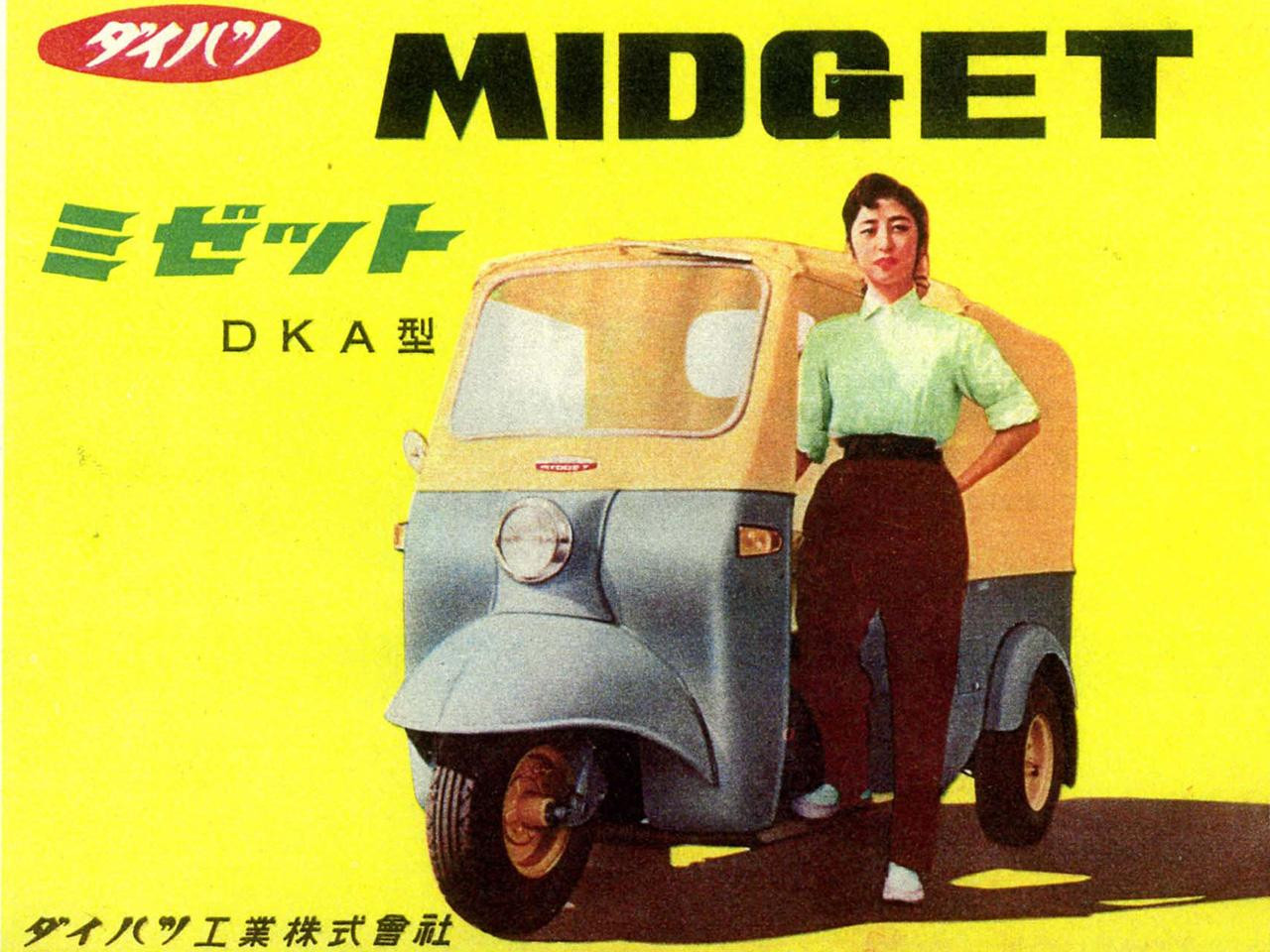
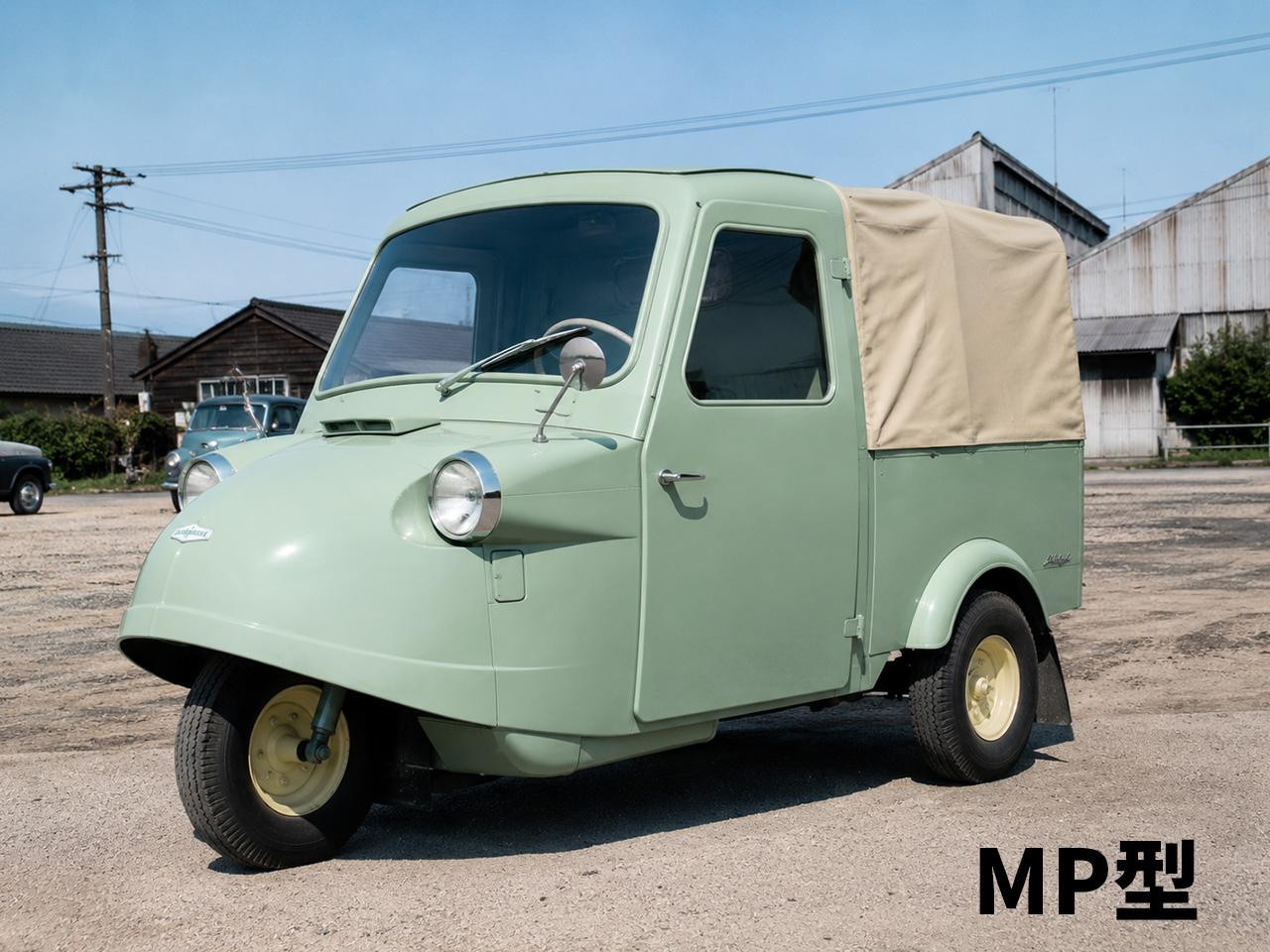
――[model DKA, model MP]
What sort of car do you picture when you hear the word “Midget”? Some of you may well recall seeing them around town in your childhood, while others may simply have heard the name.
With its rounded, endearing shape and a peppermint-green body that exudes a certain gentleness, as well as its small deck topped with a little soft top, it has the appearance of a working vehicle with a charming quality. Even today, it has lost none of its appeal, capturing the hearts of many.
The story behind the creation of the Midget is detailed in the video produced for this article.
Please be sure to watch it as well.
Furthermore, the first-generation Midget features a distinctive piece of equipment that still stands out today: a soft top fitted to the deck.
In fact, there’s a story behind this soft top that came from a user’s perspective.
Umeda, Osaka, 1957. It was a rainy night. A scooter travelling through the bar district skidded, and the crates of beer on its deck spilled onto the road. The bottles shattered into pieces. The president of a sales company, who happened to witness the scene, thought, “If there’d been a soft top over the deck, the cargo would’ve been protected.”
Apparently, this idea was immediately shared with Daihatsu and subsequently incorporated into the development of the Midget. Listening to the problems faced in the real world and reflecting solutions in the product—the Midget was already imbued with the very essence of Daihatsu’s approach to manufacturing.
Launched in August 1957, the Midget quickly spread across the country. Needless to say, its appeal as a product—which accurately captured the needs of the time—played a major role in its success.
However, behind this success lay the existence of sales companies across the country, which utilized their deep-rooted local networks to support sales of the Midget.
Daihatsu, too, actively provided sales training and promotional support to assist its sales companies. It was through these cumulative efforts that the “Midget craze” spread across the country.
At the forefront of it all were sales staff, who travelled all over the country, acting as the link behind sales companies and Daihatsu.
We would like to look back on that era through an interview with Harumichi Ueda-san, a former Daihatsu employee who lived through those days (and who is, remarkably, 92 years old!).
Will a car like a toy actually sell?

Ueda-san joined the company in April 1957, the year Daihatsu celebrated its 50th anniversary. After completing his training, he was assigned to the Automotive Sales Section. It was there that Ueda-san first saw the Midget, a car that would go on to profoundly change his life.
His initial impression upon seeing the Midget was: “Will a car like a toy actually sell? Selling this is going to be a real struggle.” Apparently, the car’s reputation was abysmal, not only within the company but also among sales companies.
However, given the initial reception, how did it go on to become such a huge hit?
“In the summer of 1957, I turned up at a beef shop trying to sell them our product. They turned me down at first, but when I explained that it would make package deliveries—which they had been doing on motorbike—much easier, the owner showed an interest. In the end, they bought a total of 20 Midgets for all their shops. I still remember that moment vividly.”
This proved to be a major turning point.
After that, word of the Midget’s convenience and ease of use spread nationwide through the recommendations of its owners.
Then, in October 1957, two months after its launch, sales of the Midget began to skyrocket. People from all over the country began turning up at the Daihatsu office in Kitahama to collect their Midgets, and the very sight of them driving them back became an advertisement. Demand far exceeded expectations, and production could no longer keep up. The situation was such that even the sales staff, including Ueda-san, had to go to the plant early in the morning to help with shipment procedures.
On one occasion, a customer visited the Kitahama office accompanied by a sales company representative, asking to purchase a Midget that was on display there. However, as it turned out, the display car did not actually have an engine fitted. When they were told it was intended solely for display purposes, the customer reportedly burst out laughing.
Ueda-san’s career at Daihatsu was intertwined with the life of the Midget. He went on to sell countless Midgets and was even nicknamed “Midget Boy” within the company.
“Talking about the Midget takes me back to the old days,” said Ueda-san, narrowing his eyes and smiling as if recalling the partner he had raced through his youth with.
First Live Commercial in Japan
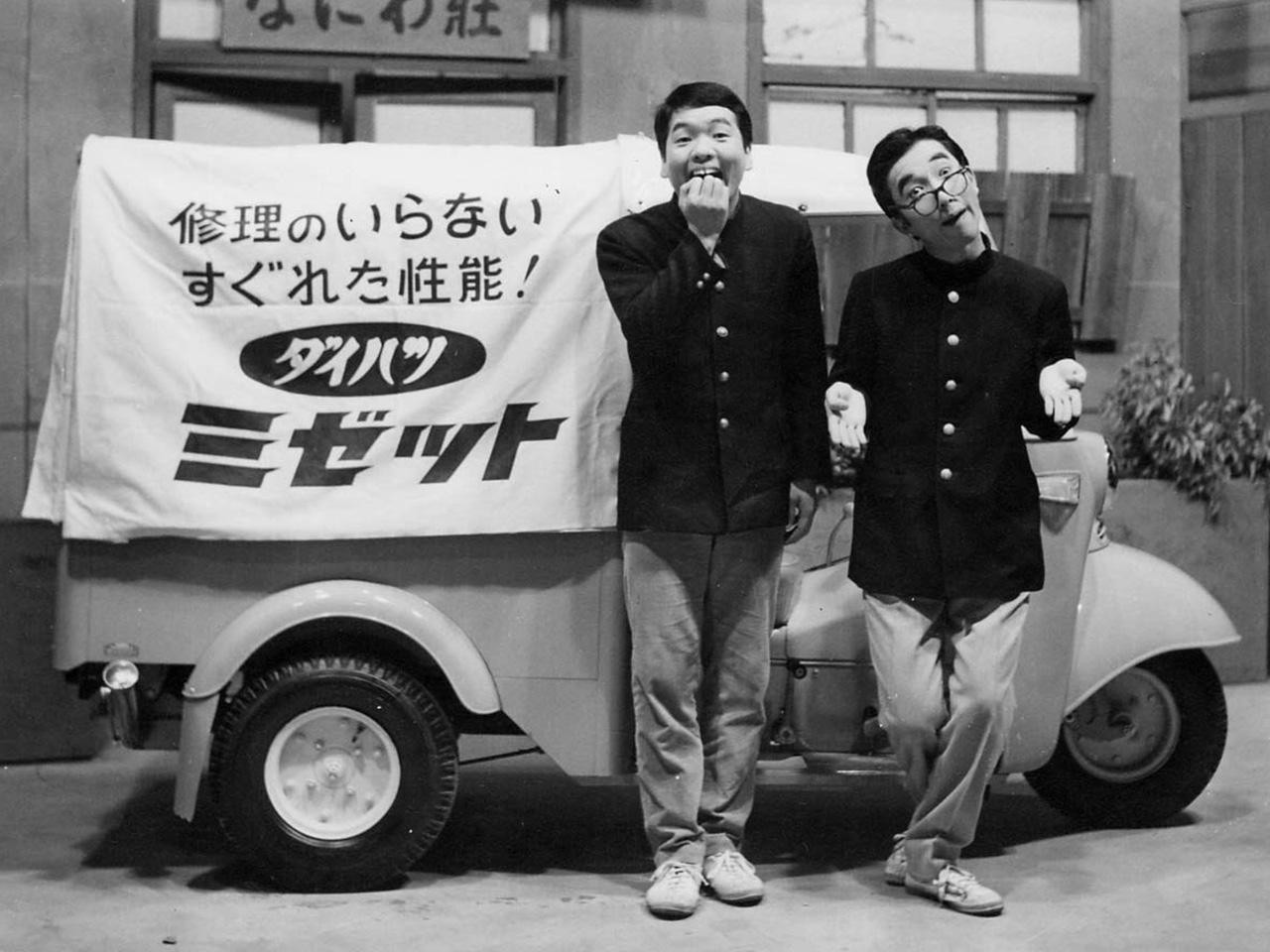
In an era before social media and the internet, the power of newspapers, radio, and television—which was rapidly gaining popularity—was indispensable for publicizing products across the country. During that time, it was Kon Omura-san, one of the Showa era’s leading comic actors, who catapulted the Midget name to national fame.
“Midget, Midget♪”
The commercial, accompanied by a lively jingle, caused quite a stir at the time, and the Midget transcended its status as a mere mini three-wheeled vehicle to become a national favorite.
So, how was that commercial filmed, and with what sentiment was it presented to the public?
I was actually a stand-in for the Midget commercial
April 1, 2026. On this day, Daihatsu was holding an entrance ceremony to welcome 331 new employees. On that spring day, we invited Kon Omura-san to Daihatsu’s headquarters. Waiting for Omura-san at reception was the Midget. Without even pausing to exchange greetings, Omura-san rushed over to the Midget, saying, “It’s been a while! How have you been?” as he gently placed his hand on the hood. The scene was just like a reunion with a family member he hadn’t seen for many years.
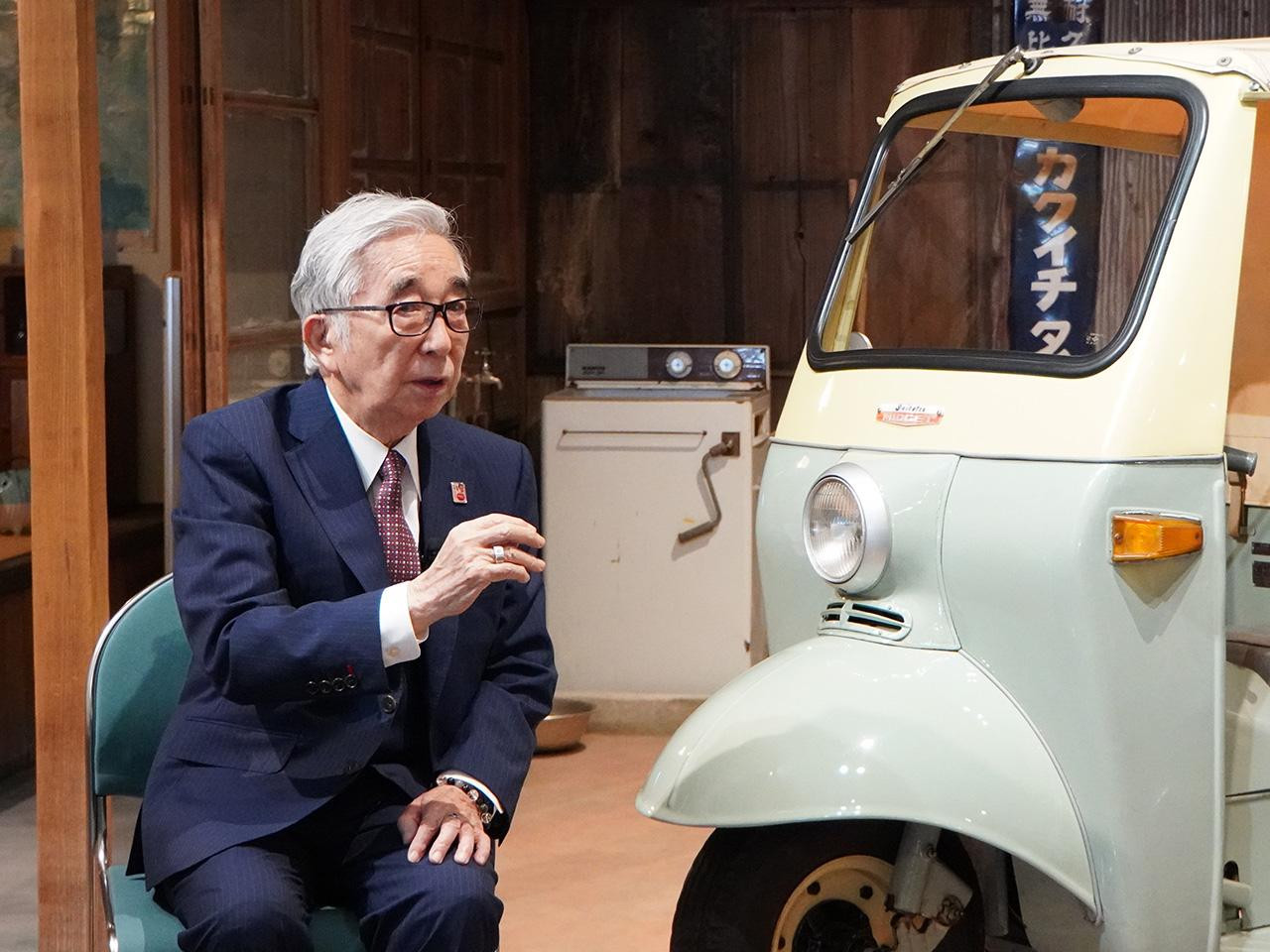
Perhaps his reunion with the Midget had suddenly brought back memories from 70 years ago. Looking back on those days with a nostalgic air, Omura-san said:
“Actually, the plan was for a female television personality to appear in the Midget commercial. But just before the live broadcast, she got so nervous she collapsed. The set was in absolute chaos. People were panicking, going, ‘What are we going to do? The live broadcast is about to start!’
That’s when the scriptwriter said to us, ‘Right, this is all very sudden, but Kon-chan and Sasa-yan, you’ll have to step in!’ And just like that, before we knew it, we ended up in the Midget commercial.”
Many of you will probably be aware that Omura-san appeared in the comedy program “Yarikuri Apartment” (broadcast from 1958-1960), sponsored by Daihatsu. The live commercial for the Midget, which was broadcast at the end of each episode, caused quite a stir at the time. However, I suspect that very few people today realize that it all came about with a “sudden stand-in.”
We have now managed to obtain some rare footage from that period. Please have a look.
“There was no script for the commercial. Sasa-yan and I just had a quick run-through before the shoot. But you know, while we were bantering back and forth, we had to keep an eye on the cue cards telling us how many seconds we had left and bring it to a dead stop right at the end. That was the hard bit.”
It’s surprising to learn that those lighthearted exchanges were, in fact, performed almost entirely off the cuff. However, behind that perfectly synchronized banter lay the artistic skill that Omura-san and Juro Sasa-san had honed over many years.
After that, Kon Omura-san’s popularity spread across the country together with the Midget. He often recounted how, while walking through town, children would call out to him: “Kon-chan! The Midget’s tipped over!” The first-generation Midget of that era would sometimes tip over on sharp corners. Even so, people may well have taken a liking to its somewhat endearing appearance, seeing it as a familiar and approachable presence.
Thoughts on the Midget
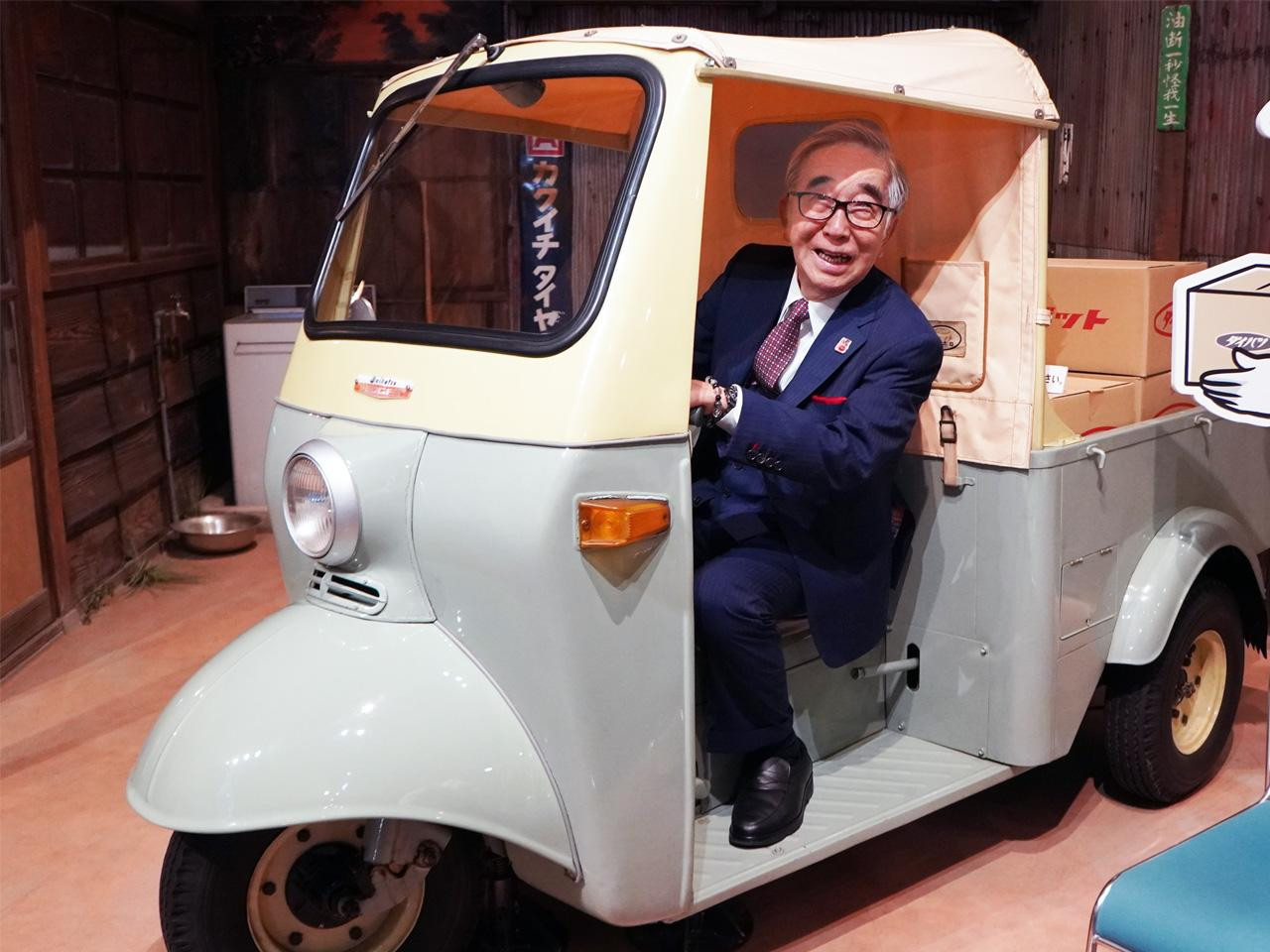 *Took a special ride for the photo
“The Midget is like family. Whenever I see it, it’s as if I can hear it saying, ‘How’ve you been? We’ve both been doing our best, huh?’ It brings back fond memories and makes me happy. It has walked alongside me throughout my life.”
As he spoke, Omura-san gently placed his hand on the hood of the Midget once more. His expression seemed to reflect fond memories of the days when it used to race all over Japan.
Even after 70 long years, there are cars that remain etched in people’s memories. And there are people who continue to regard these cars as if they were family. Perhaps the Midget is not merely a means of transport, but something that has served a link between people, and between people and the times.