Born in 1951, shortly after the war, the BEE was Daihatsu's first passenger vehicle. Though a small three-wheeled vehicle, with its innovative structure, it continues to captivate people today as a symbol of that era's groundbreaking challenges.
Through this one car, which has been rediscovered through human bonds after a long time and carefully preserved in its original form, we explored the passions and power of connection inherent in MONODUKURI.
An Encounter That Began with a Single Call
We’re Daihatsu TANKENTAI!
Hello, we’re Daihatsu TANKENTAI (Explorers)! While we’ve previously shared articles, this time we’re introducing articles written by TANKENTAI members recruited internally!
While we were pondering what to make the first theme of our exploration activities, we received a call from Chairman Kawamura of KAWAMURA-KAKO CO., LTD., which handles Daihatsu’s plastic parts.
He said, “There’s a car I absolutely want to show you.”
That car was none other than the Daihatsu BEE—an indispensable model in the story of Daihatsu’s history.
he One Car That Remained in His Heart
We promptly requested an interview with Chairman Kawamura and inquired about the circumstances.
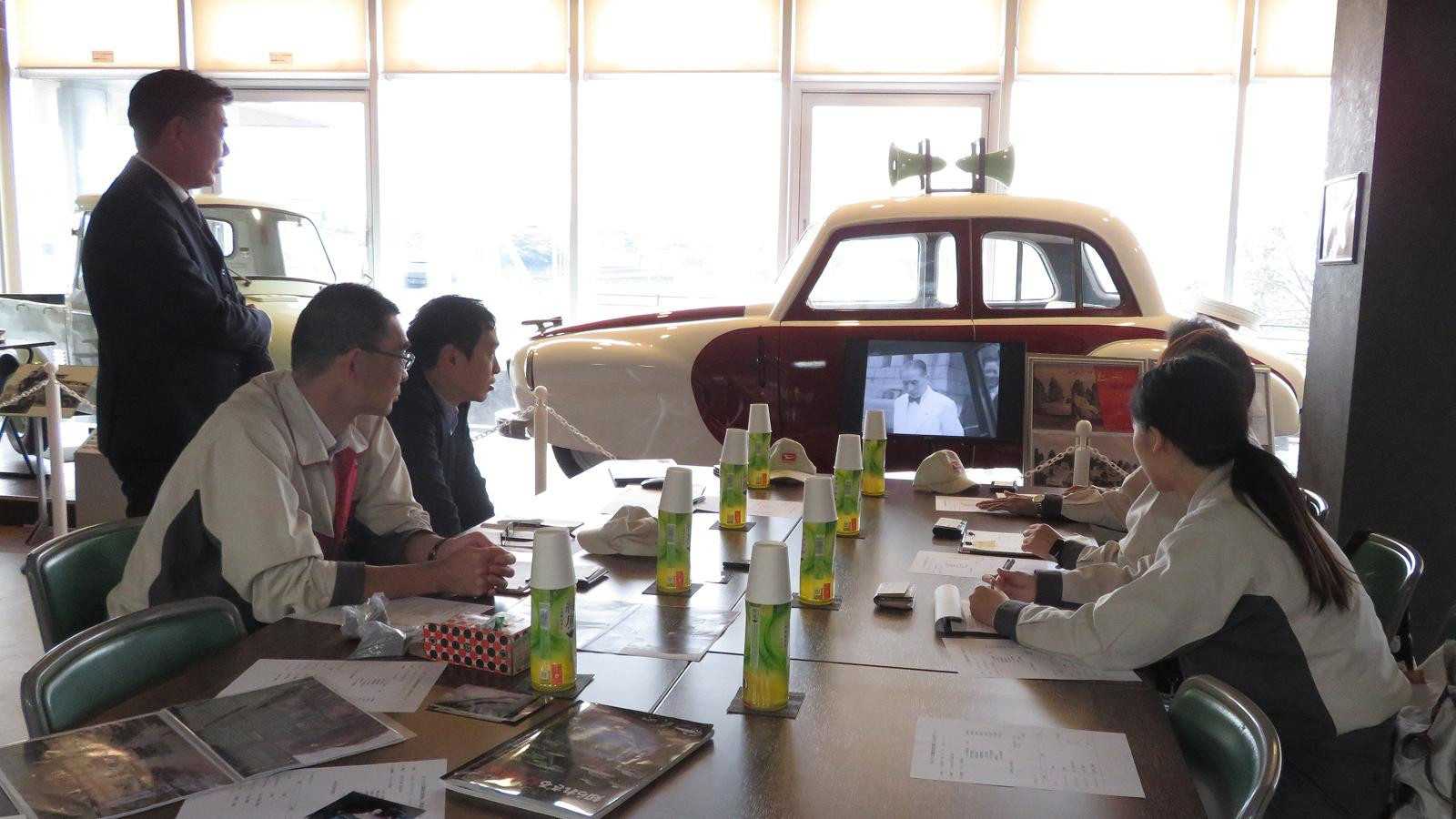
When Chairman Kawamura was a Daihatsu employee, he was deeply impressed by the three-wheeled passenger vehicle BEE he saw in front of Daihatsu’s Head Office. It was a vehicle that left such a lasting impression on him that he thought, “I want to see it again someday.”
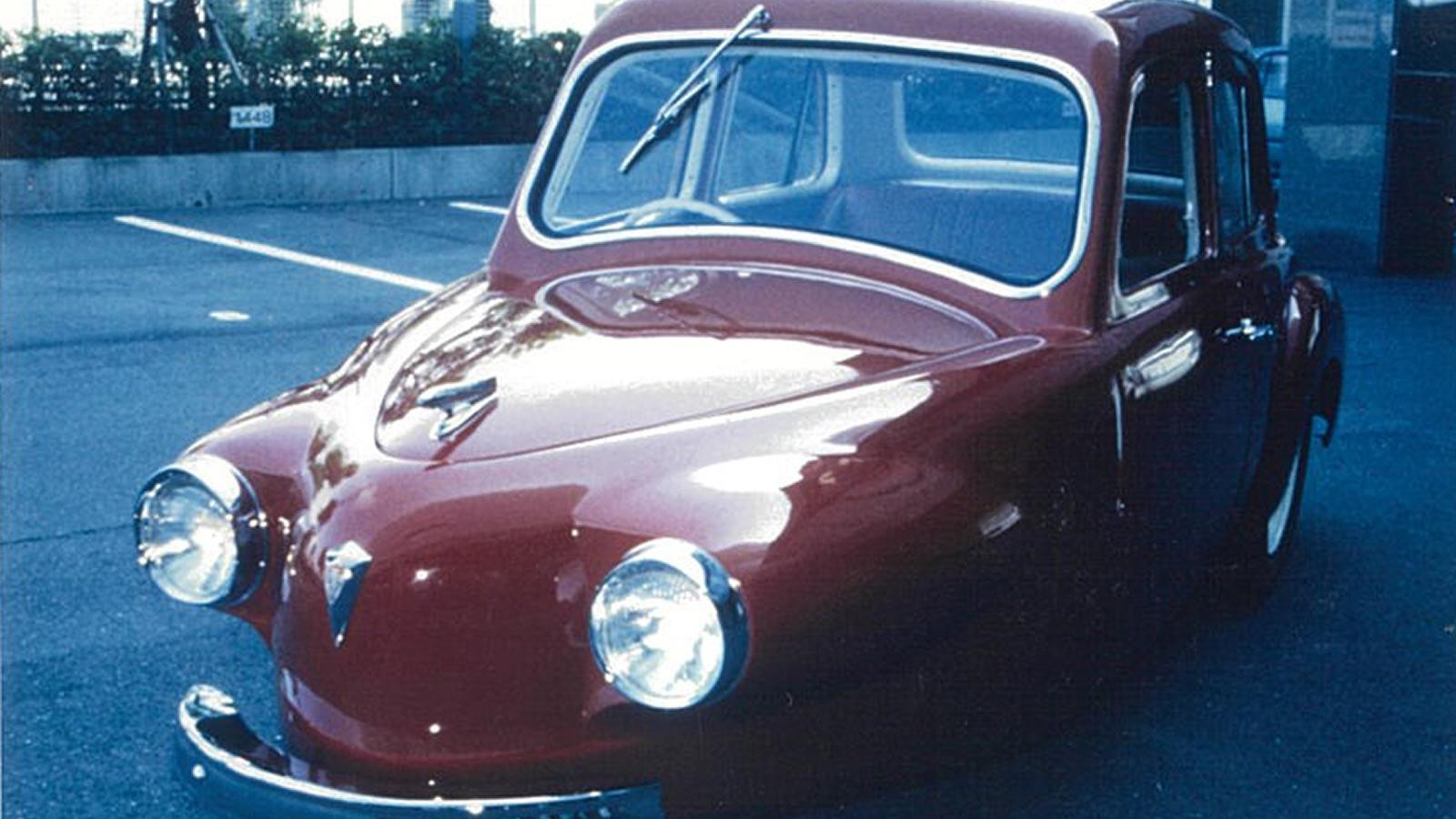
After all these years, the opportunity finally came to actually acquire that BEE.
It began with an introduction from Chairman Kawamura’s acquaintance, leading to a meeting with Mr. Yamashita, who ran his own museum in Mie Prefecture.
He was the one who painstakingly restored the BEE, piece by piece, as it lay decaying and falling apart.
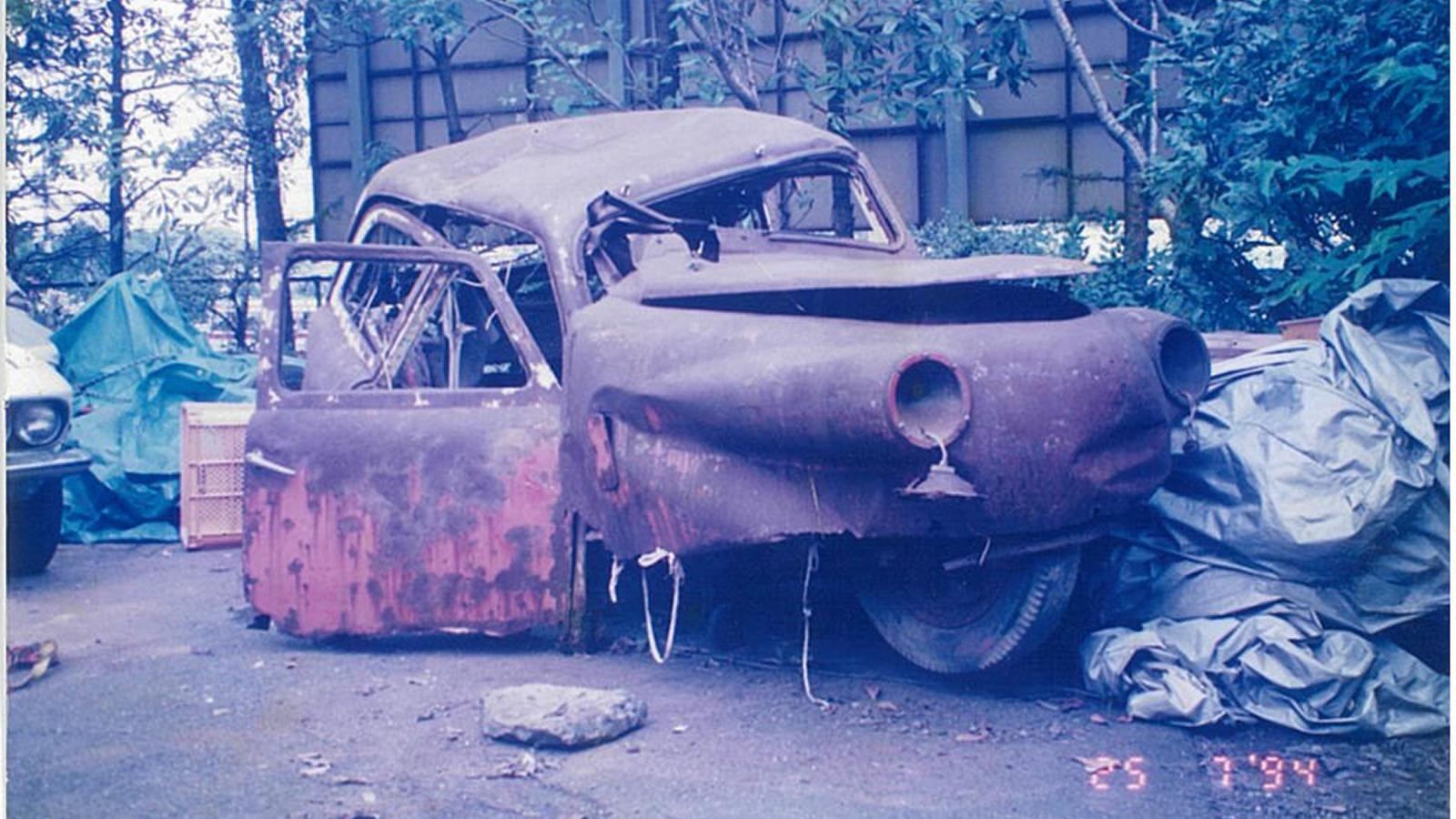
Chairman Kawamura actually traveled to the location and engaged in passionate discussions, resulting in Mr. Yamashita proposing, “I was looking for someone to take over the BEE. If you’re that enamored with the car, I’ll let you have it.”
The car was accepted without hesitation—this is the BEE featured in this article.
What Kind of Car Is BEE in the First Place?
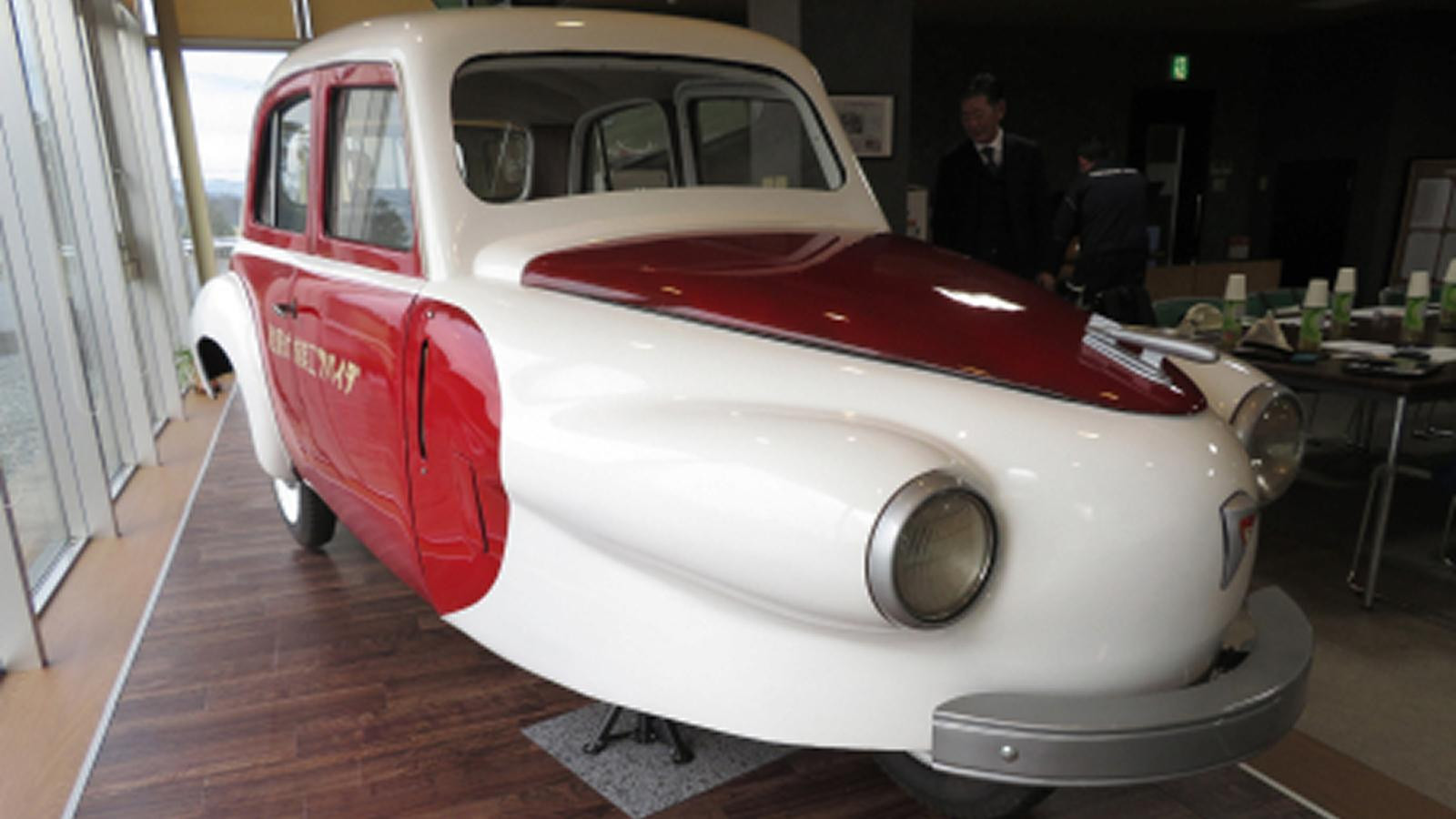
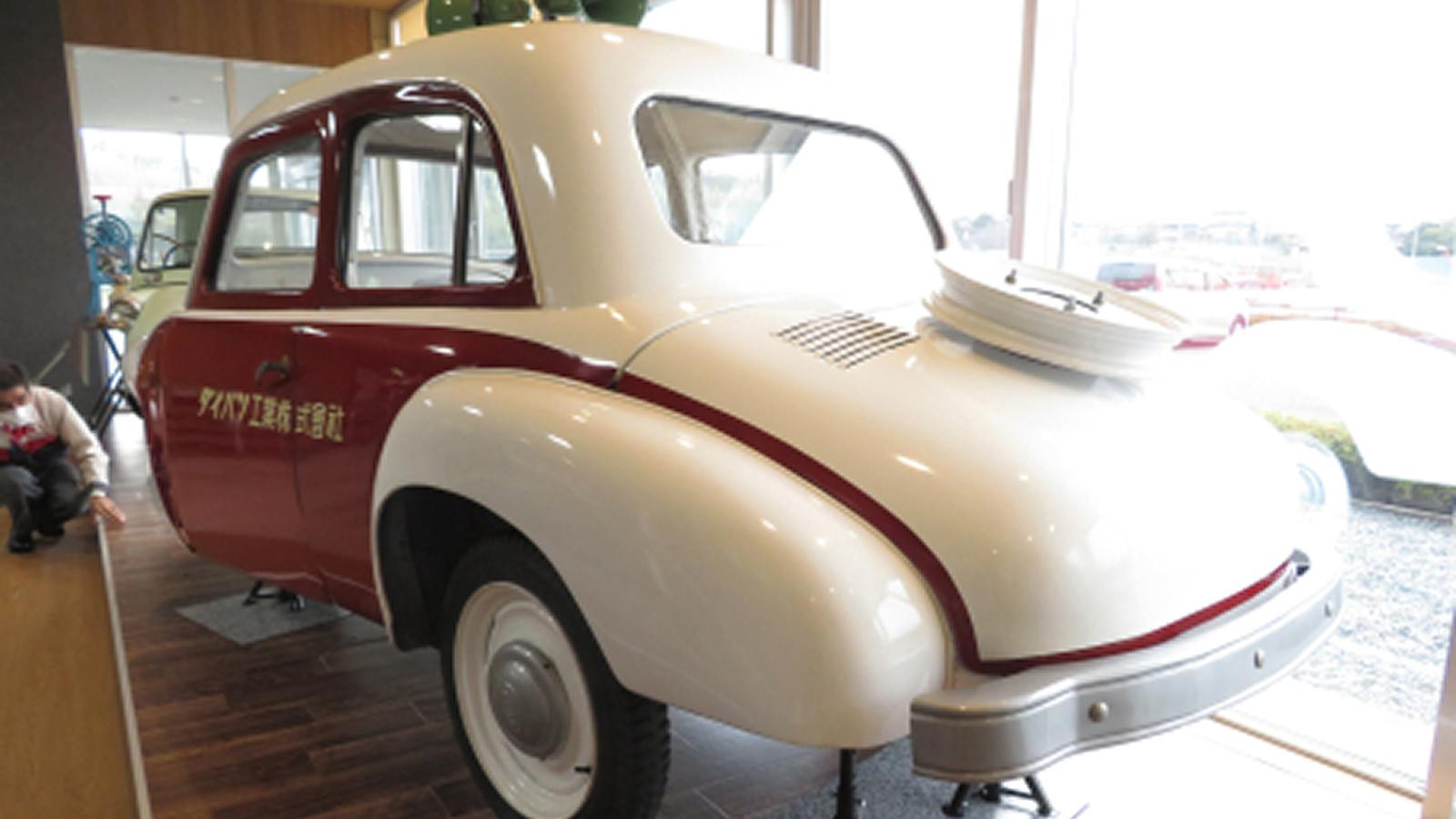
The BEE was Daihatsu’s first passenger vehicle, produced in October 1951, shortly after the war (the same year the San Francisco Peace Treaty was signed). Born in an era of material scarcity, this car embodied the very spirit of challenge that Daihatsu represented at the time.
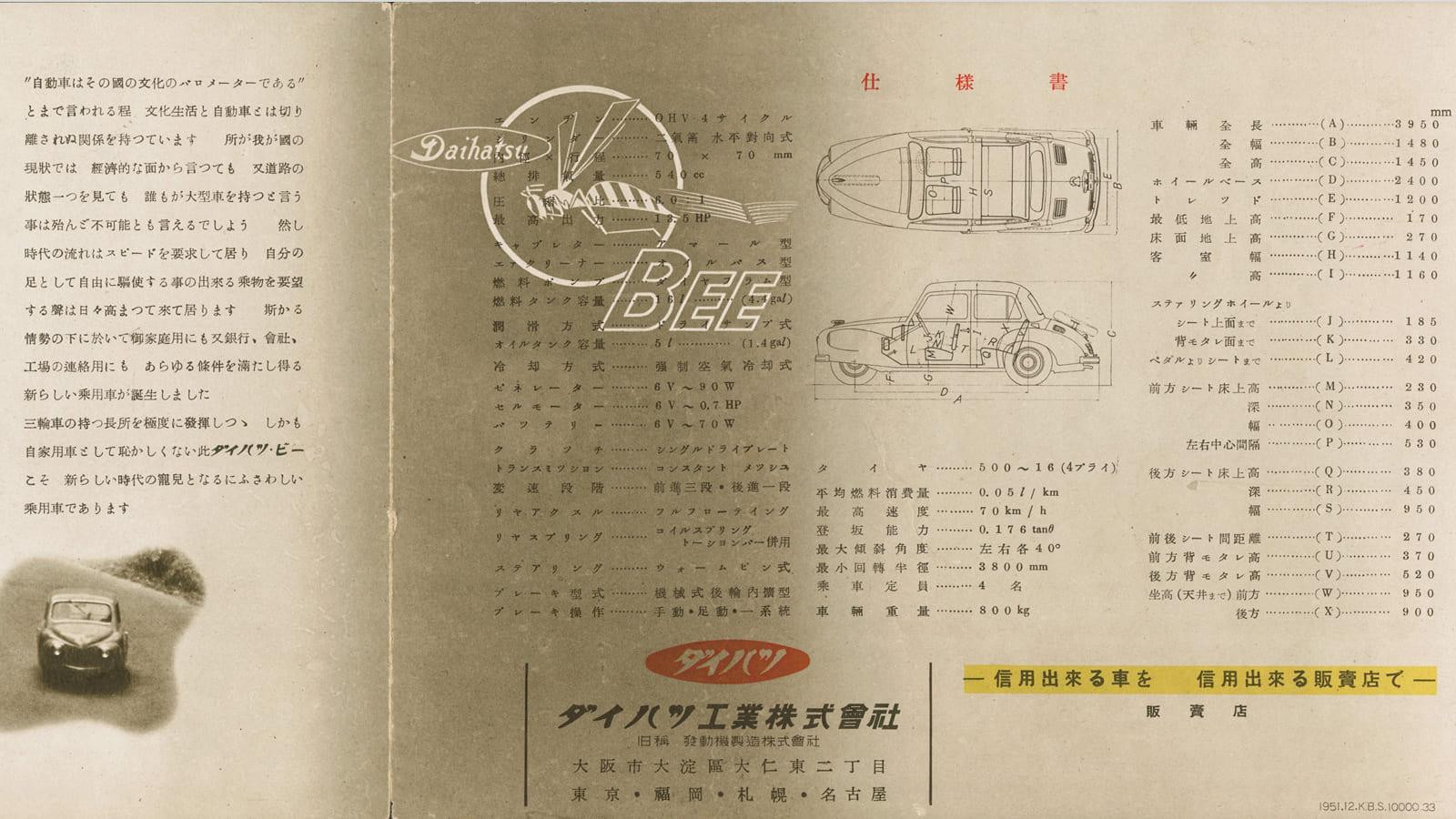
<Specs>
・Three-wheeled passenger vehicle
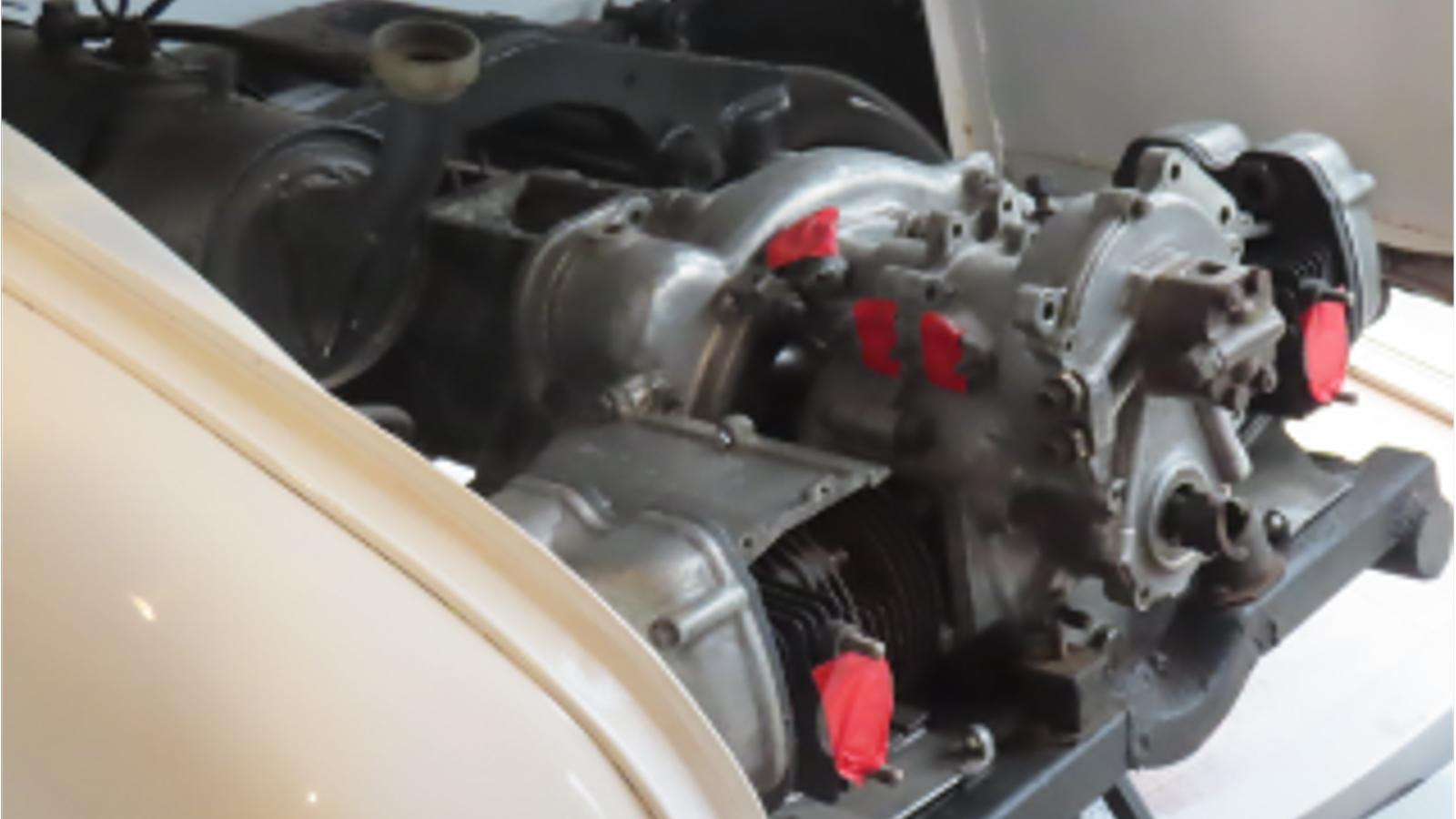
・Engine: 800 cc, 4-stroke, 2-cylinder, horizontally opposed, forced air-cooled, 18PS
・Transmission: 3 forward gears, 1 reverse gear
・Steering system: Unique steering method, round steering wheel
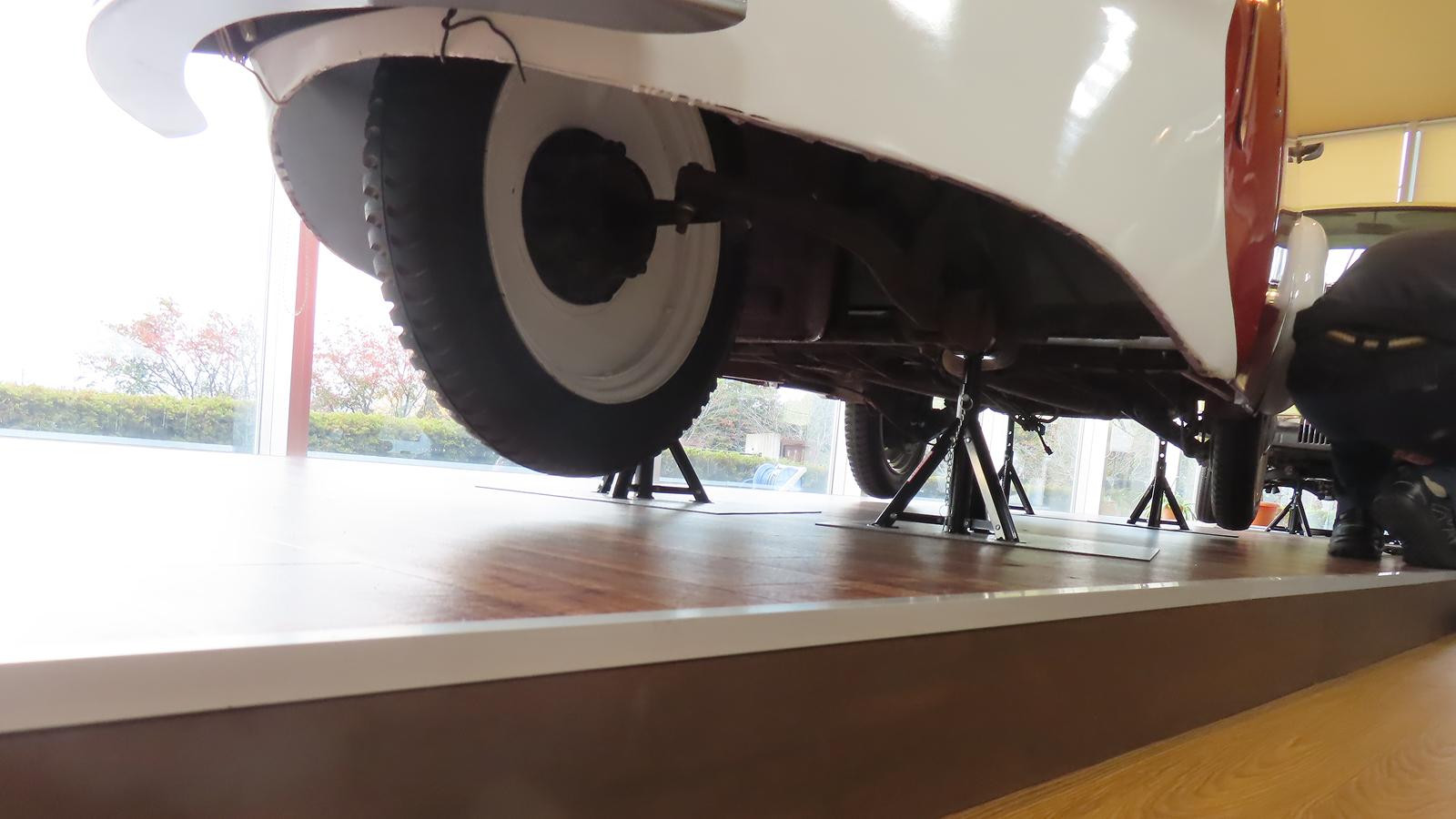
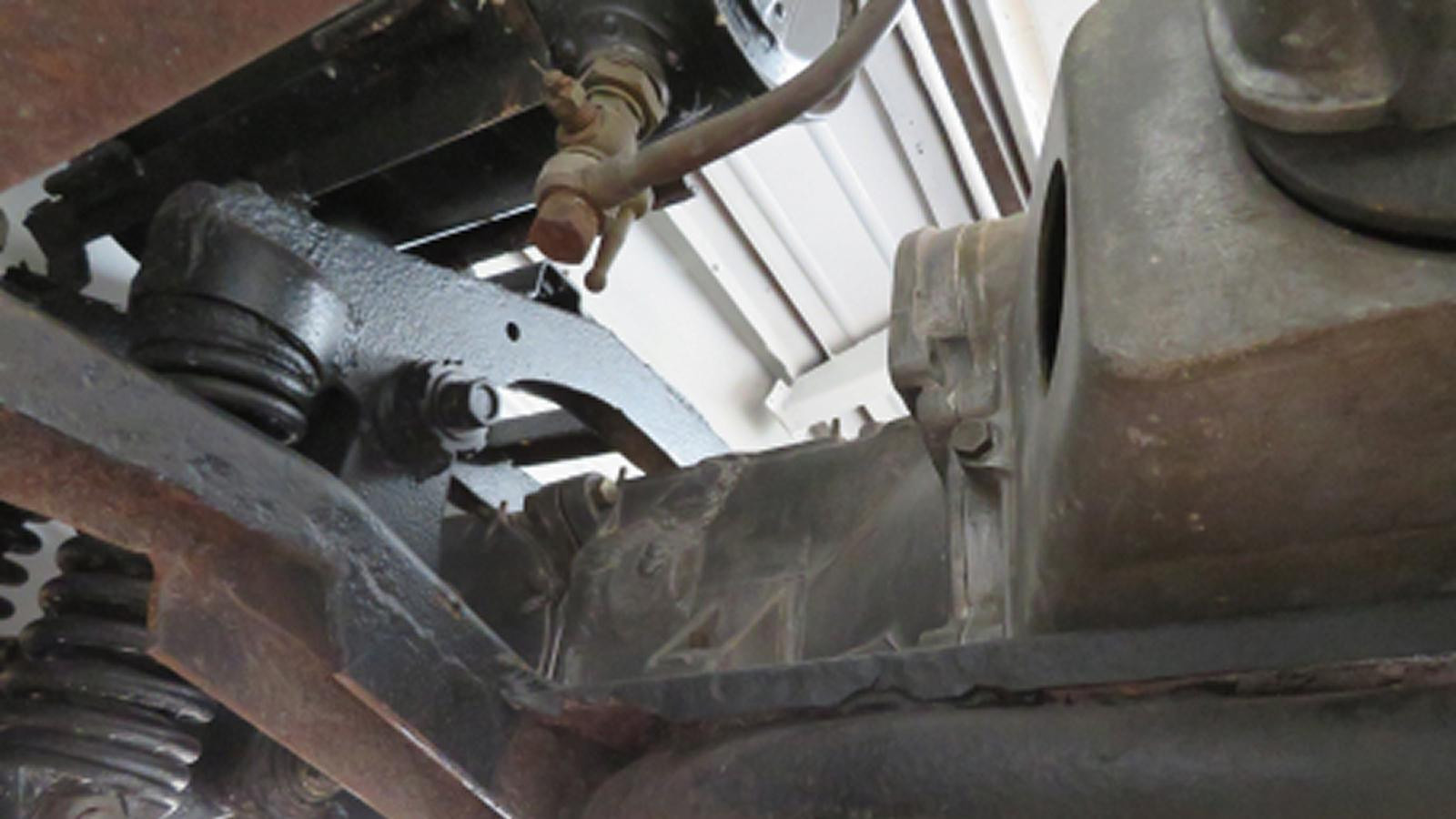
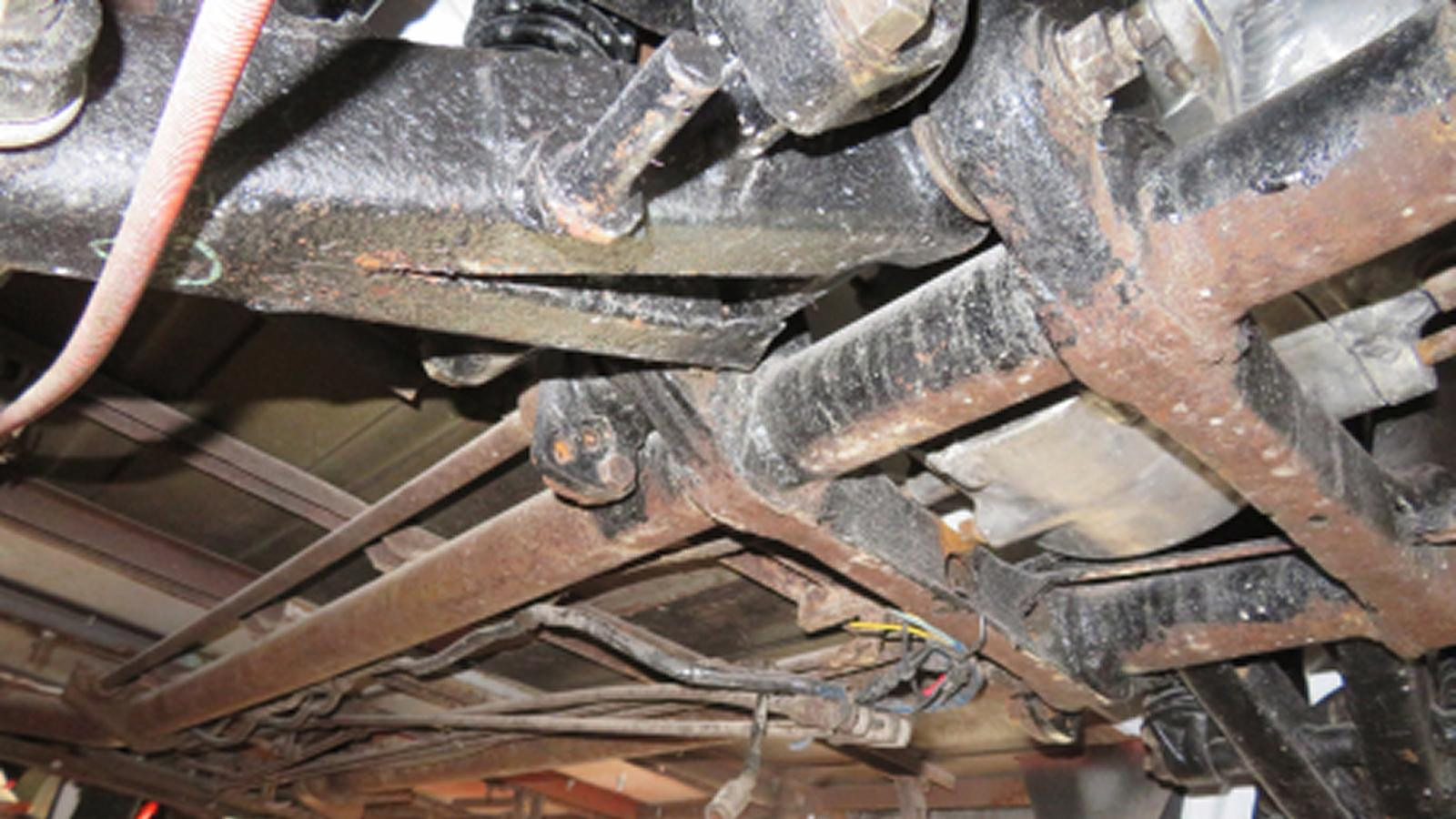
・Rear wheel suspension: Independent suspension using torsion bars
・Seating capacity: 4 persons
・Maximum speed: 80 km/h
・Overall length: 4,080 mm; overall width: 1,480 mm; overall height: 1,440 mm
*Click on the following six images to enlarge them.
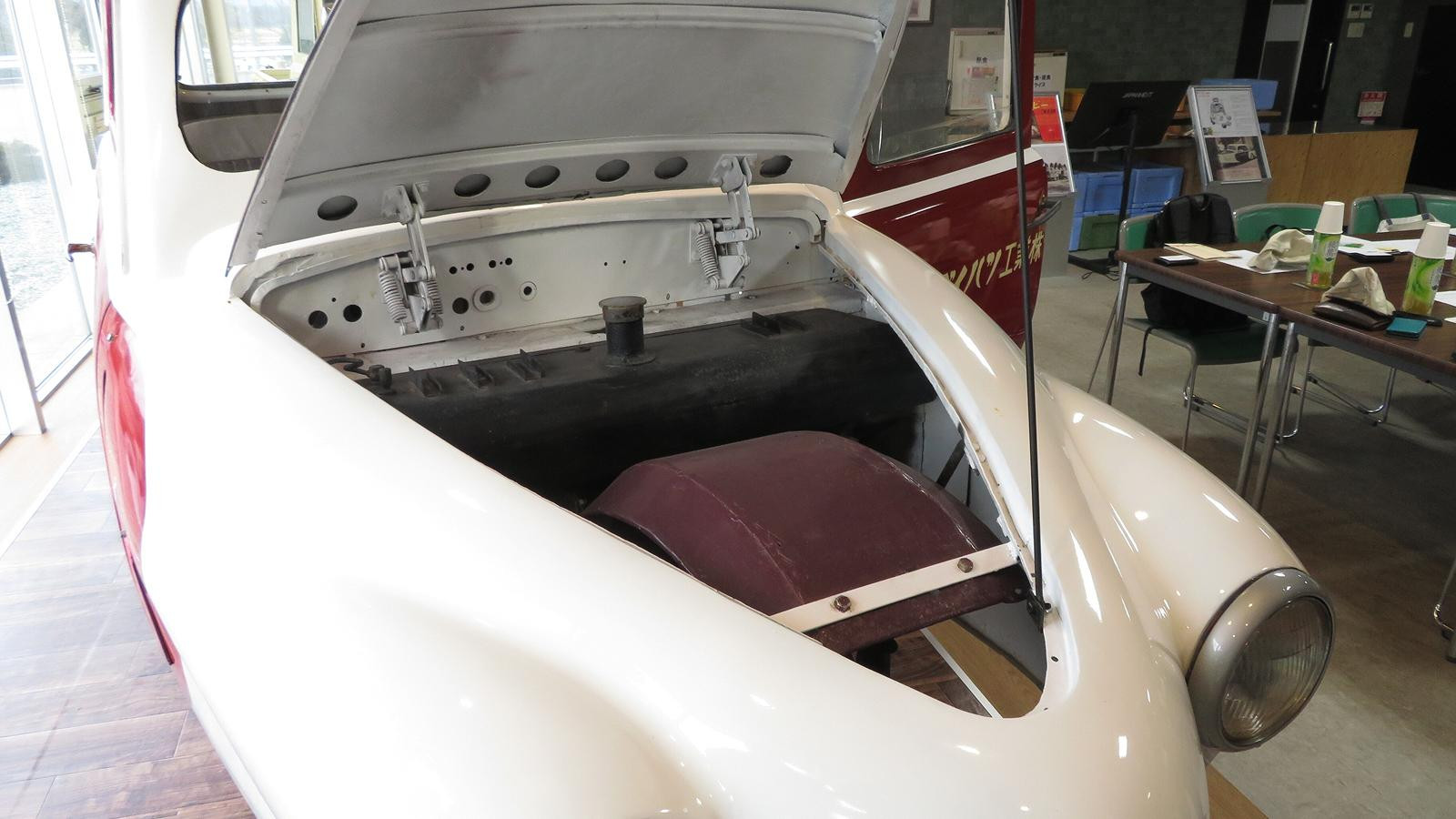
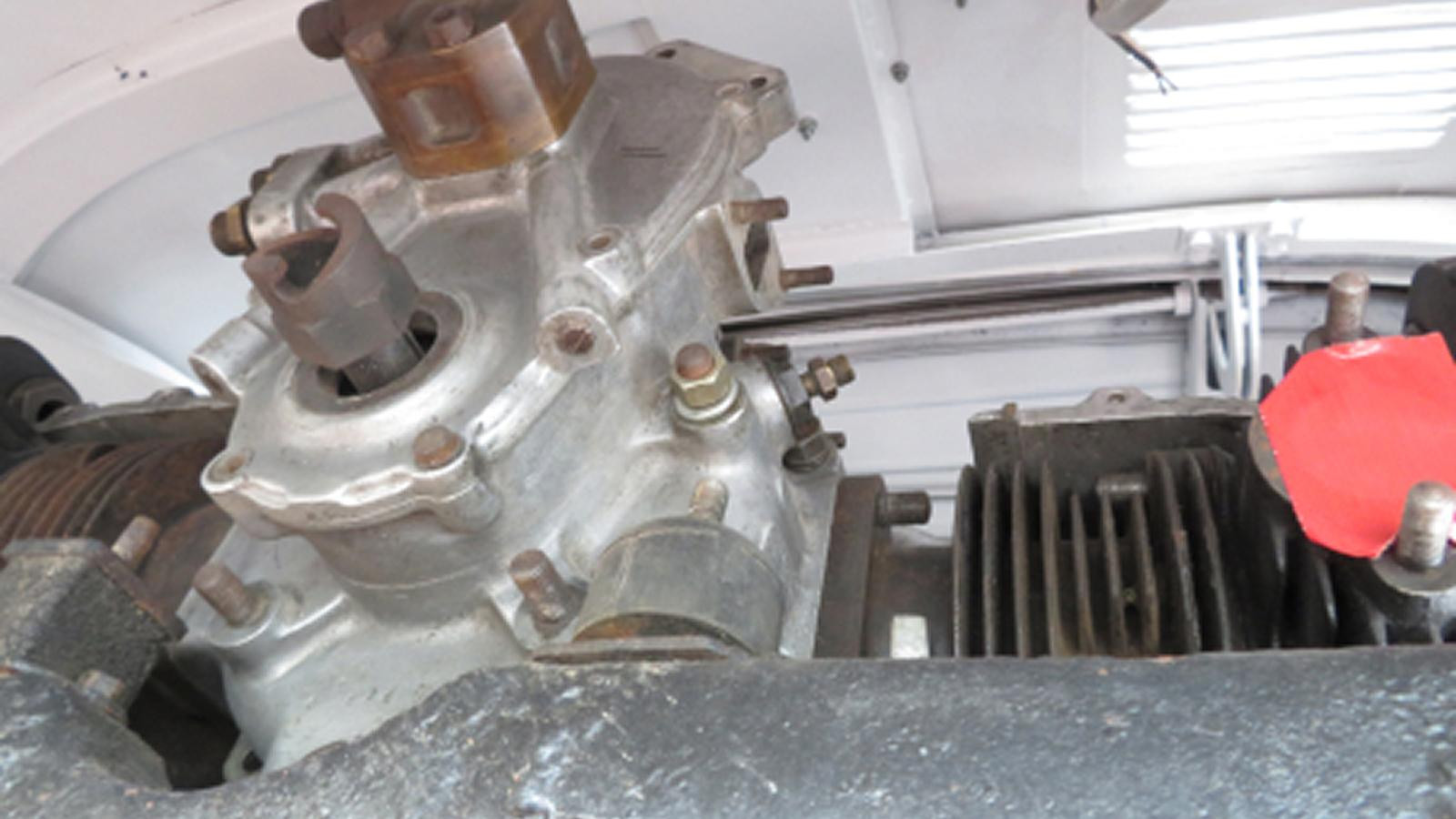
BEE interior
*Click on the following four images to enlarge them.
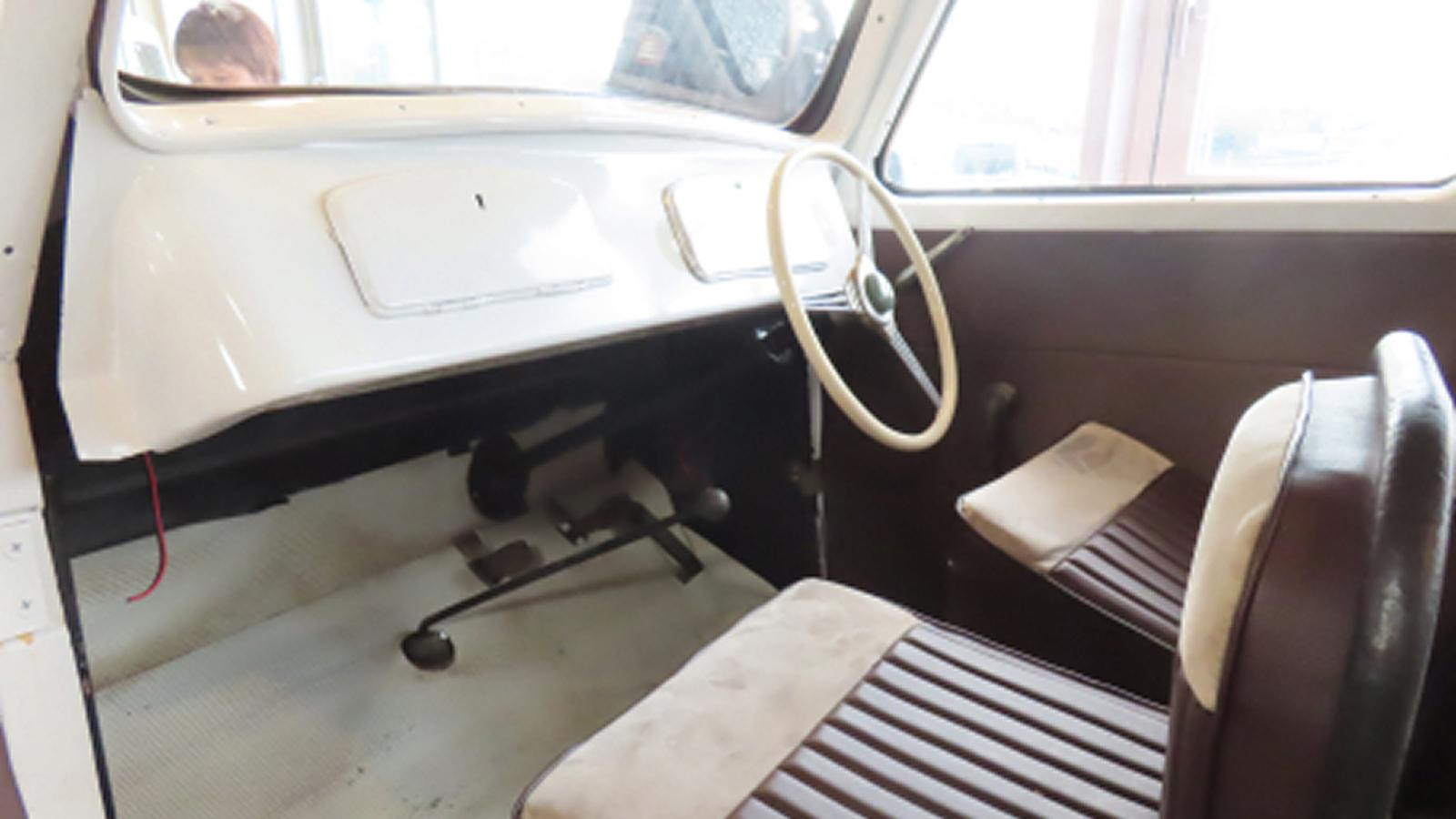
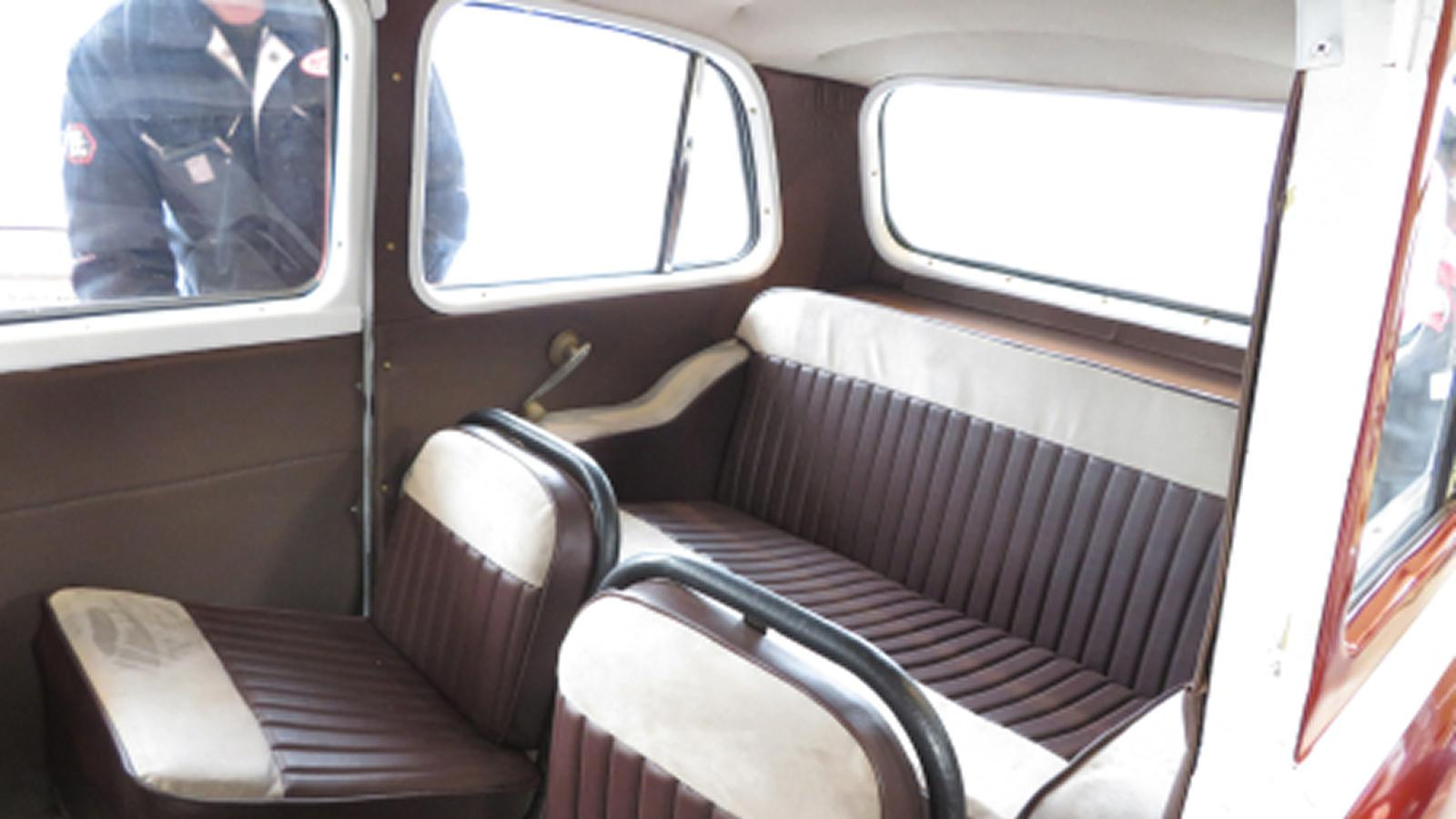
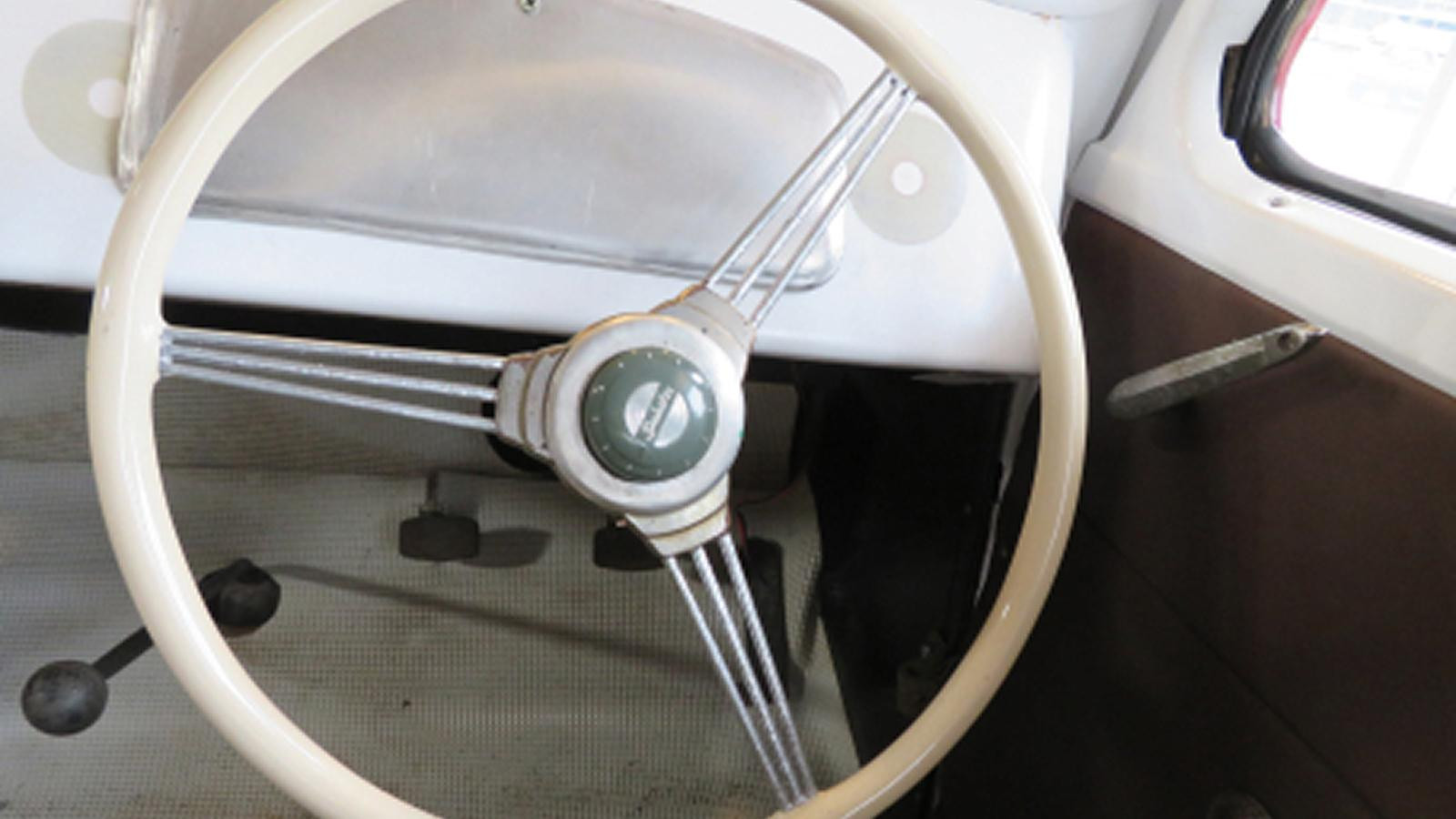
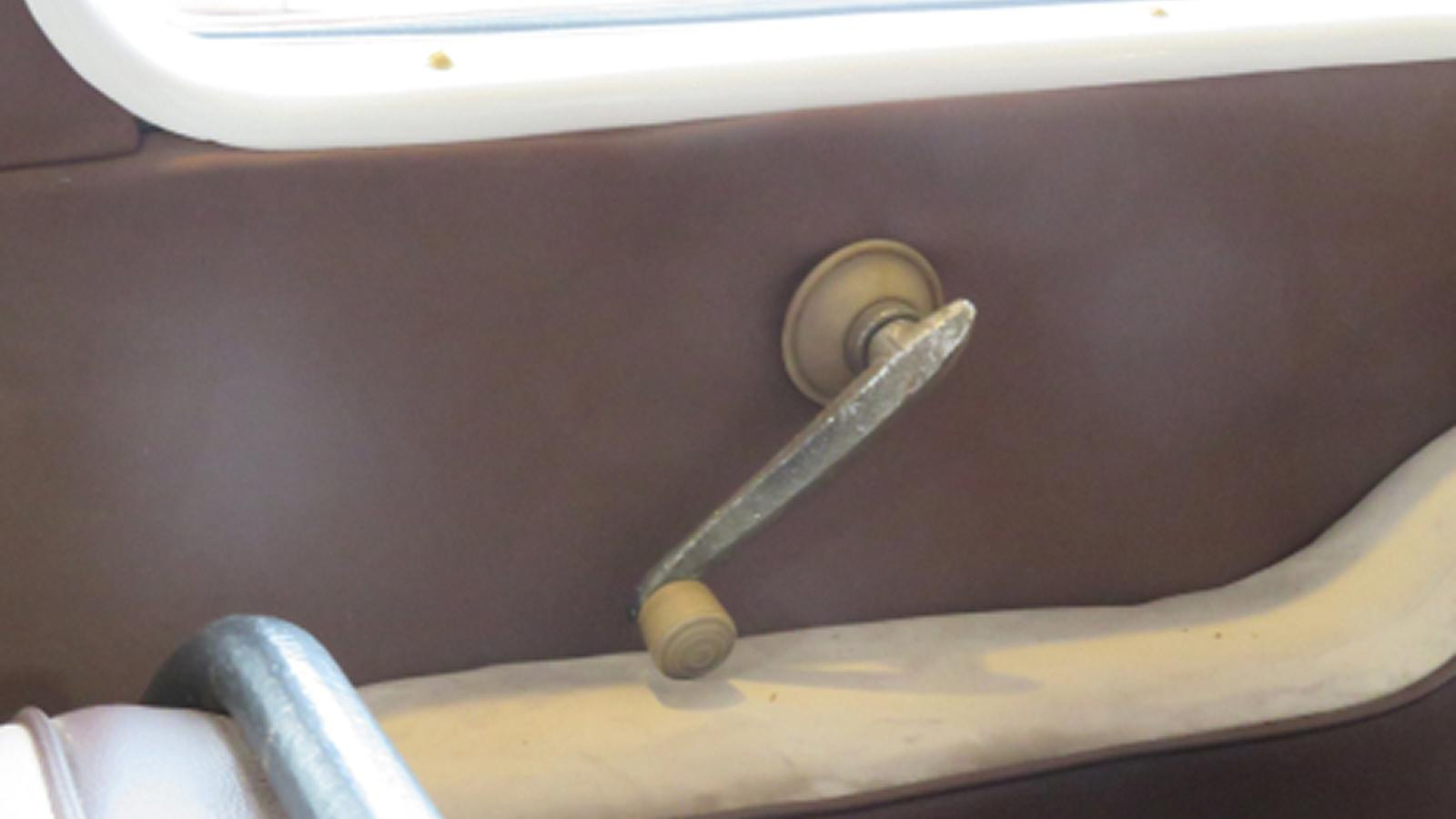
The steering wheel is slim, offering a grip that feels true to its era.
The rear seats retain hand-operated regulator handles, strongly evoking the atmosphere of passenger vehicles from that time.
*Click on the following four images to enlarge them.
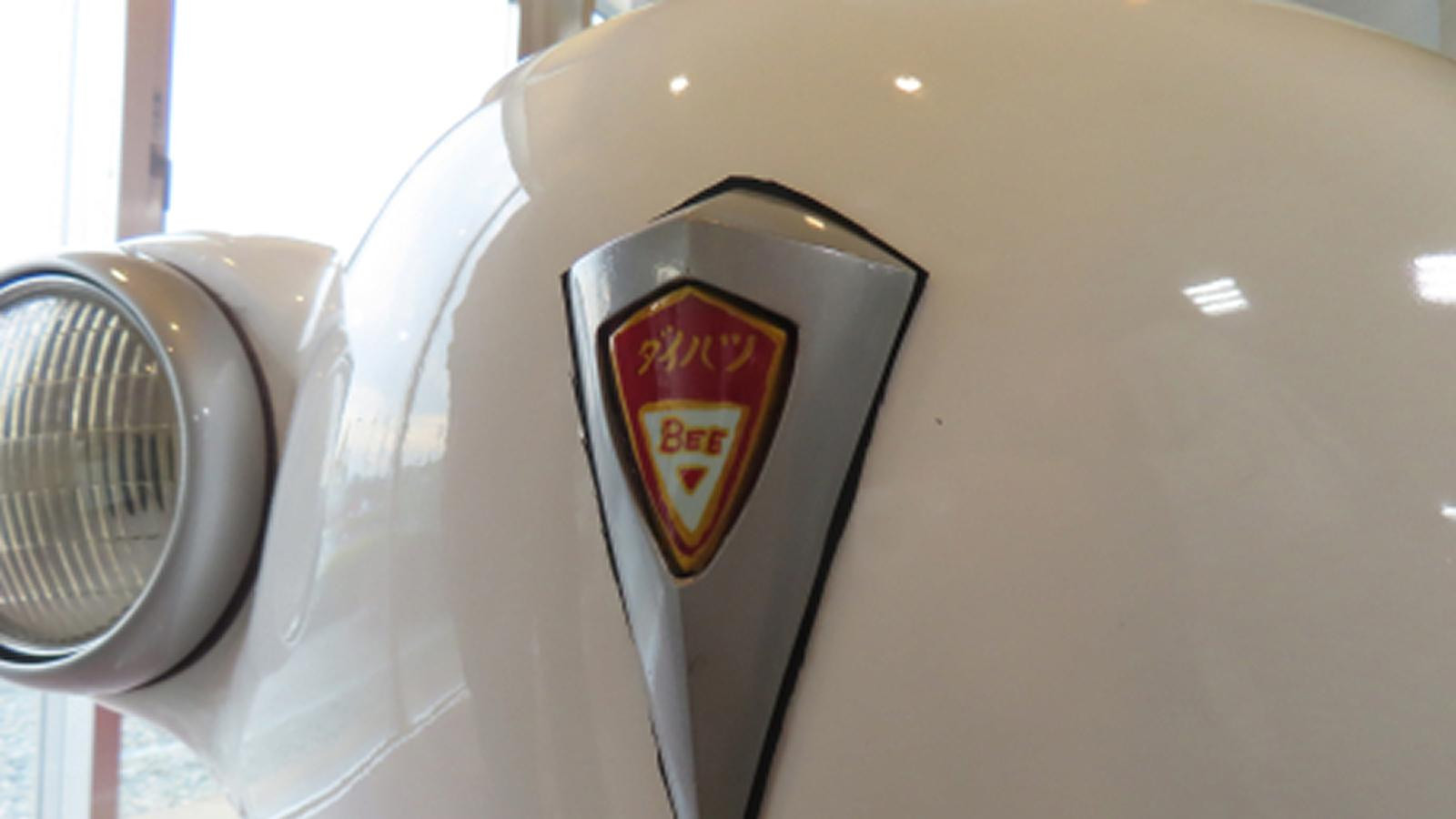
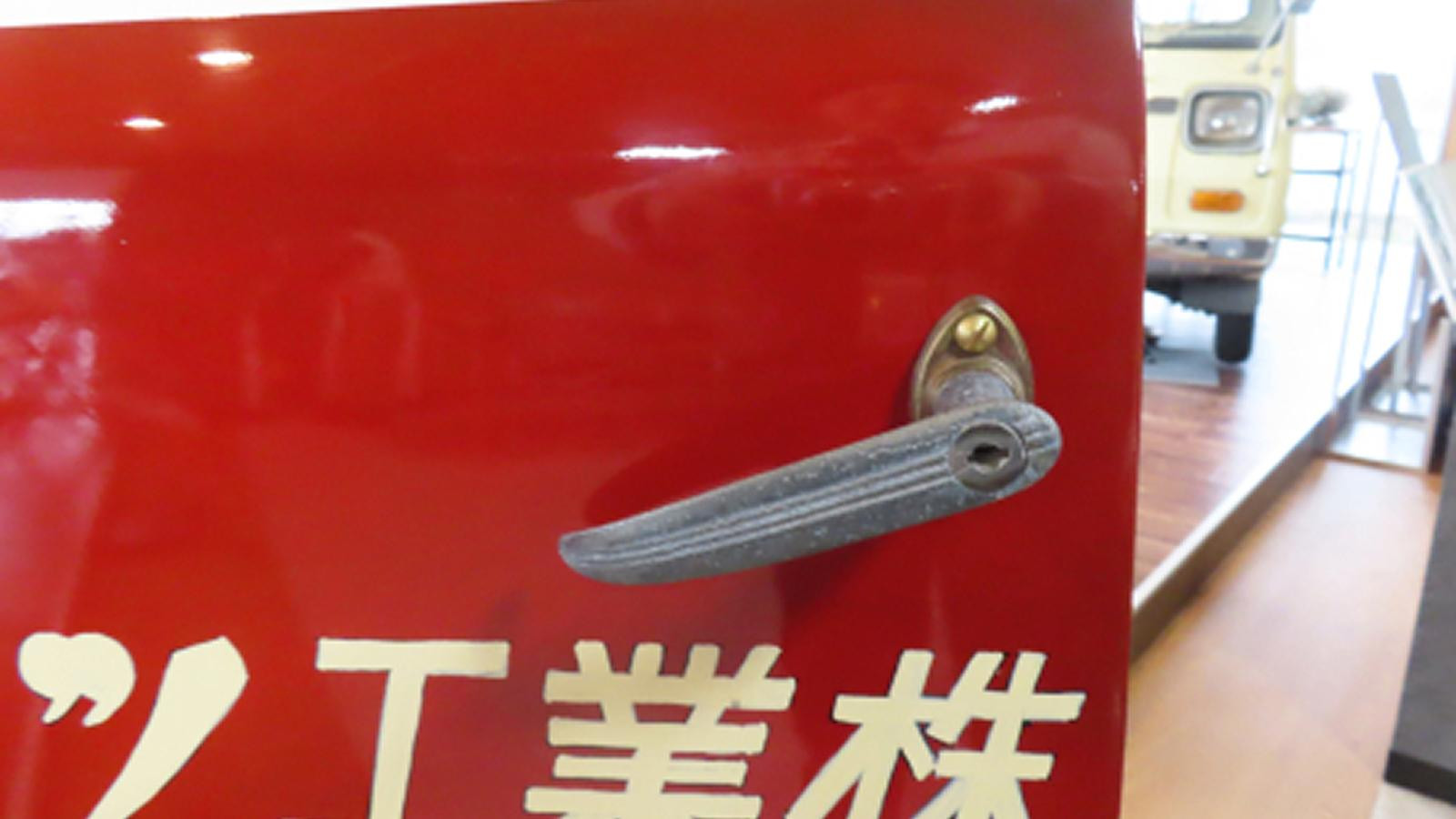
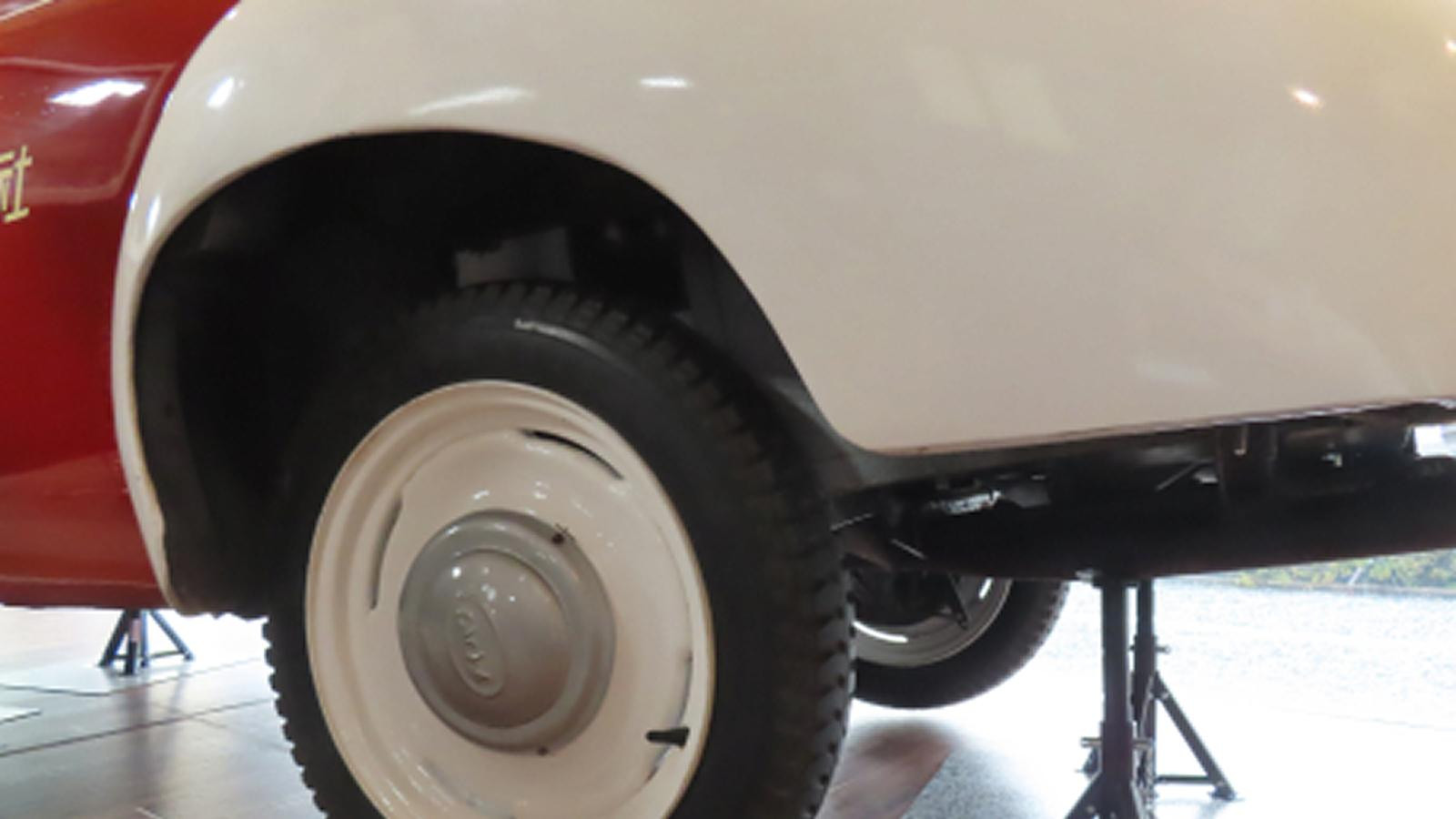
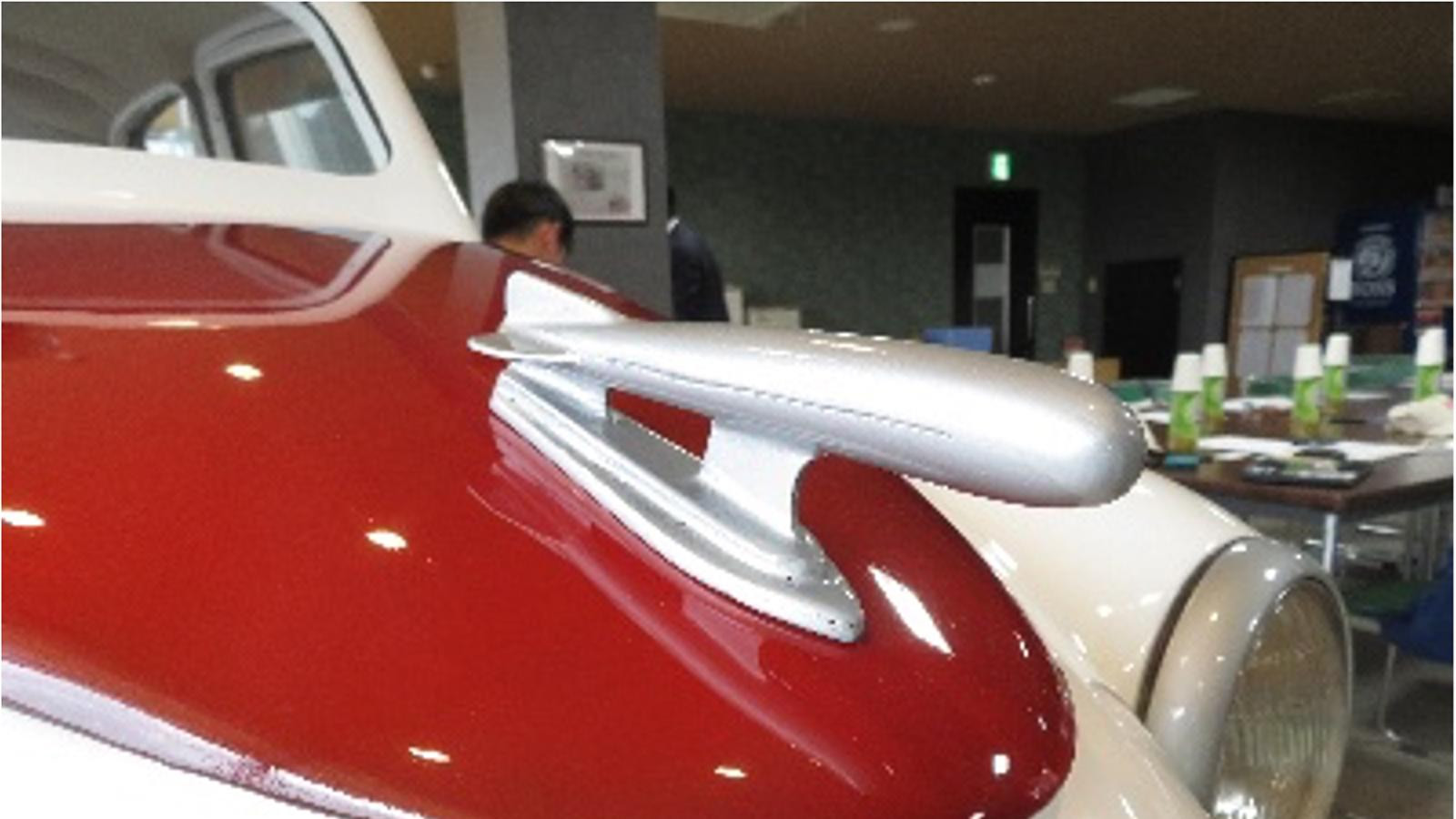
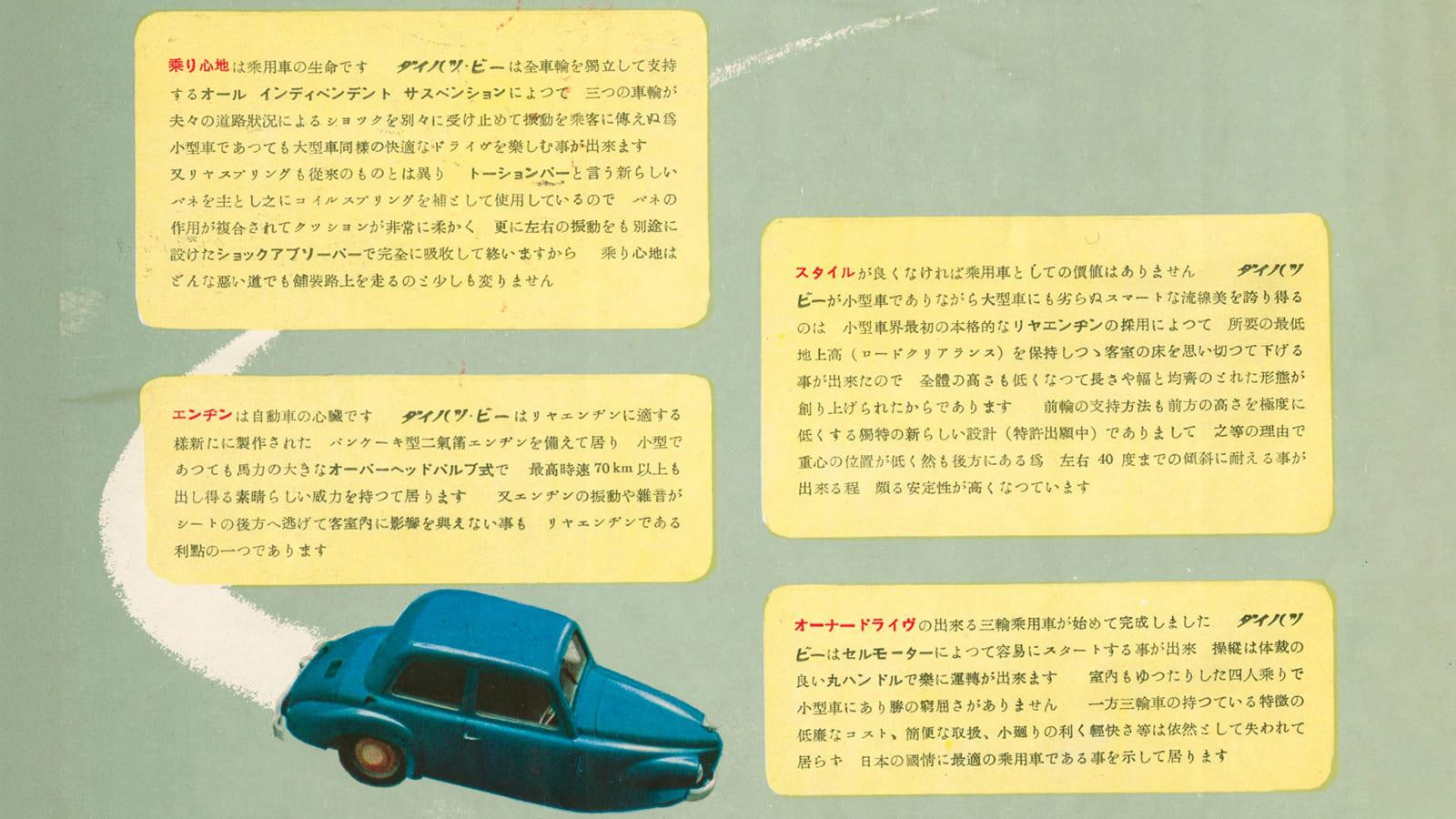
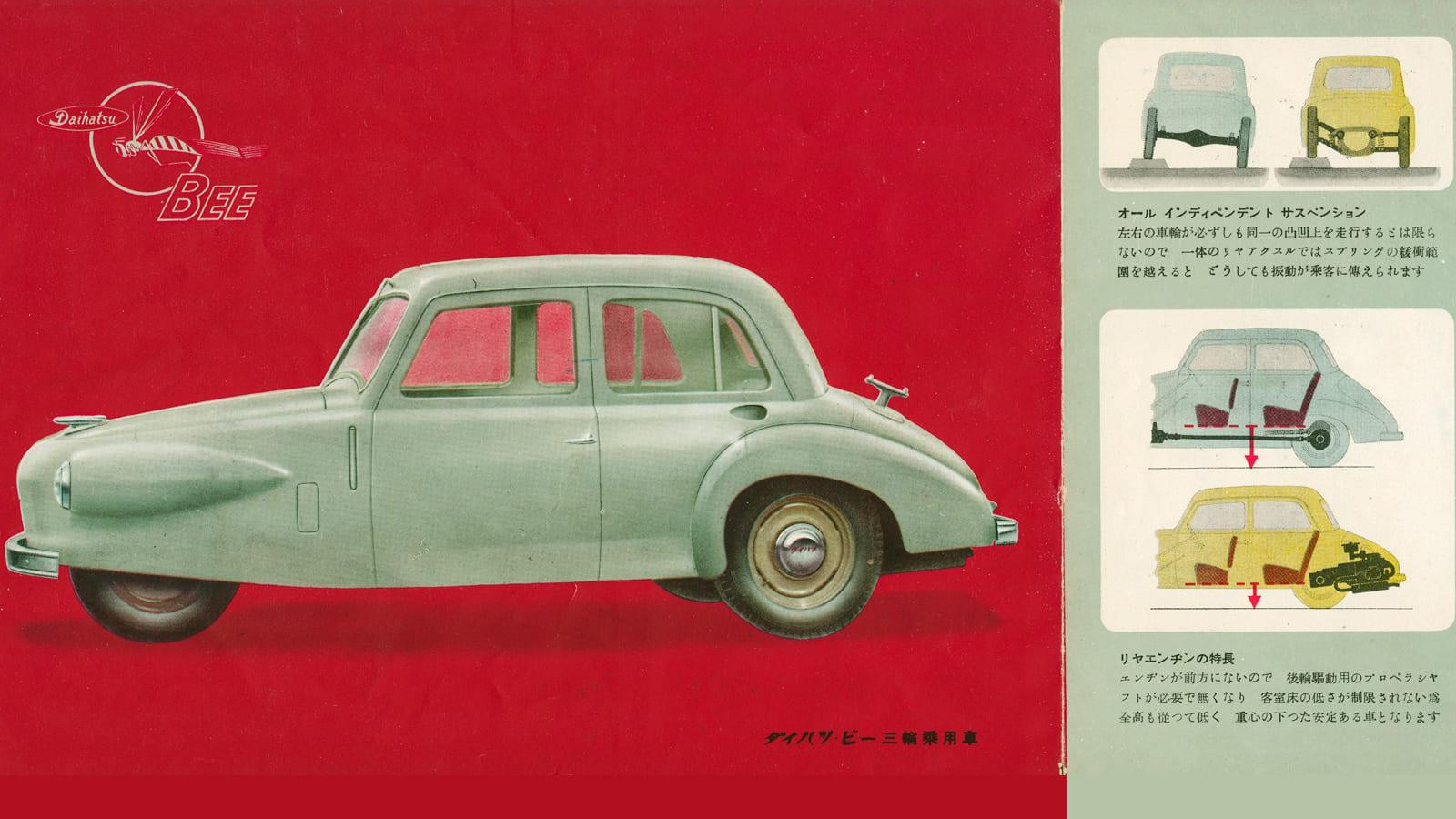
The BEE was Japan’s first passenger vehicle equipped with a horizontally opposed engine. Its advanced structure features a rear-mounted engine, transmission, and differential gearing in a direct-drive configuration, along with the torsion bar suspension, which was uncommon back then. At the time of development, literature was scarce, so the development was highly original, with the exterior being examined using general catalogs borrowed from those who had returned from overseas.
The name BEE was chosen through an internal company contest, and as the name suggests, it features an adorable design reminiscent of a honeybee.
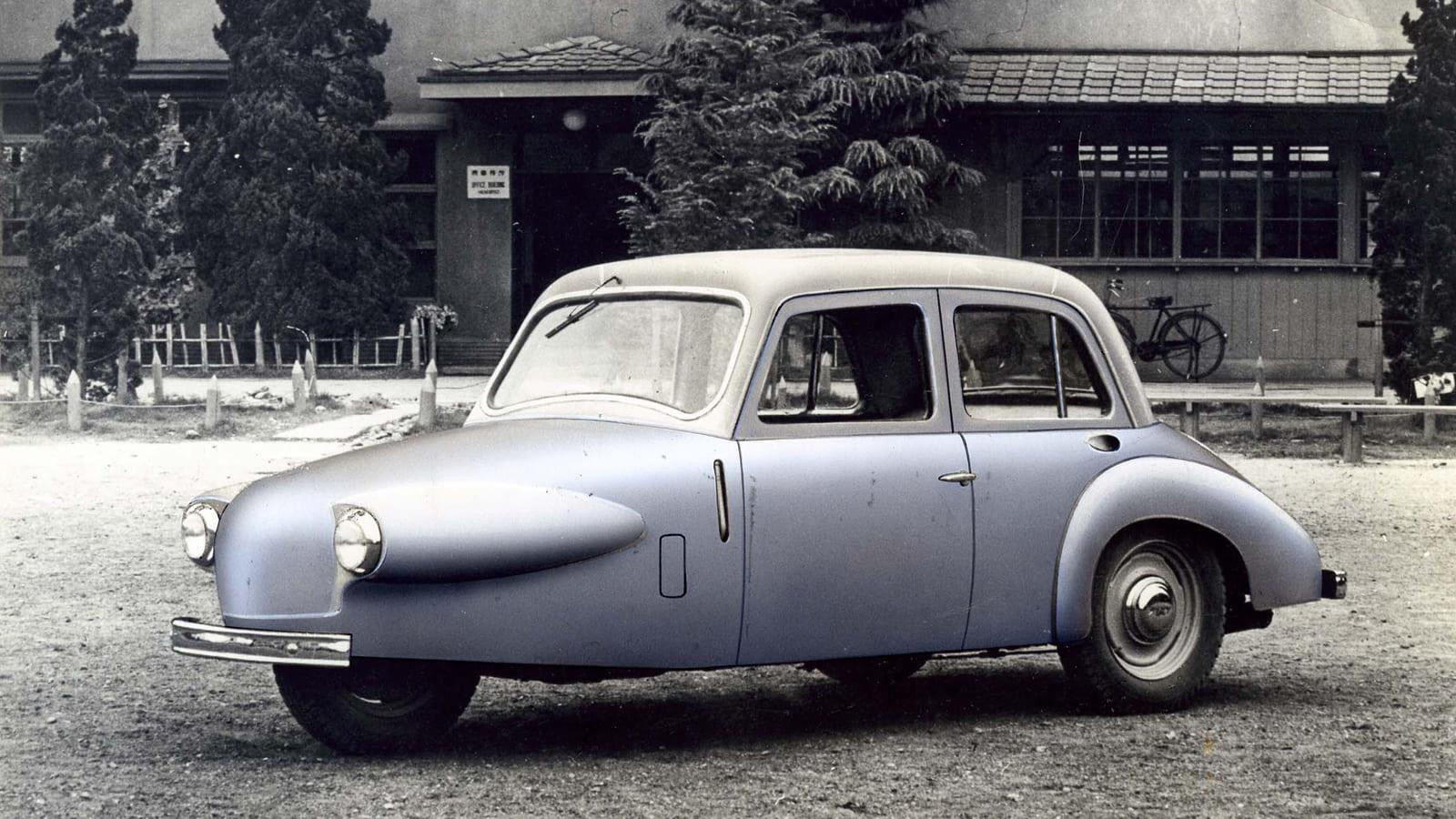
Originally sold as a private passenger vehicle, it was also used as a taxi following feedback from dealers noting that there was also demand for taxis. While popular with general users, it required numerous improvements for taxi use. Daihatsu at the time struggled to establish a mass-production system, leading to its regrettable discontinuation in 1952.
However, its modern design and functionality earned strong support from general users. Records indicate that it continued to be seen on city streets for several years after production ended.
(From company histories: “Celebrating 60 Years: Daihatsu’s Advancement” and “Burning and Racing: Daihatsu’s 80-Year Journey”
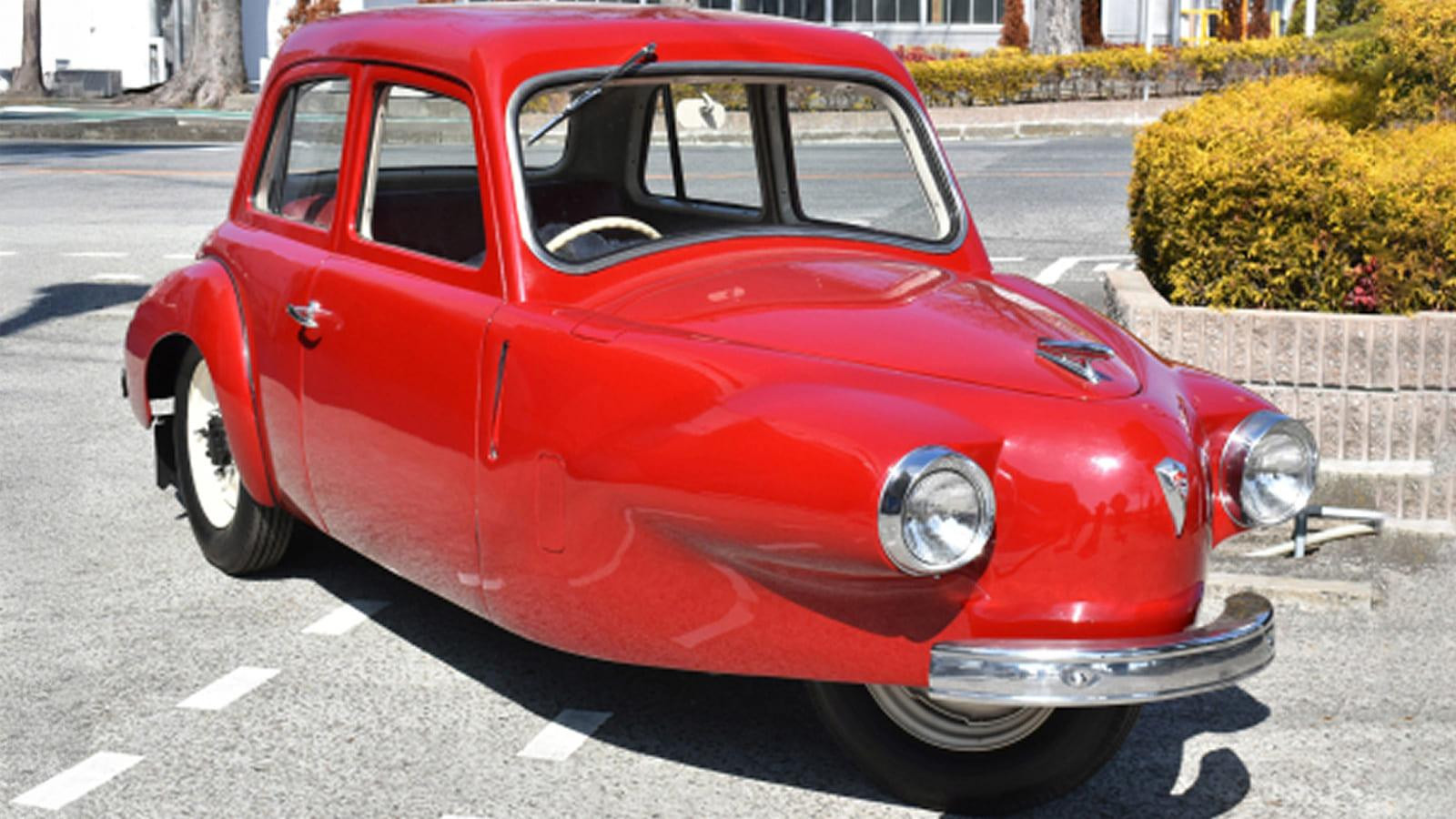
Due to its low production volume, only three surviving examples are said to exist.
One of these is in Daihatsu’s care.
<Photograph of the BEE owned by Daihatsu>
Incidentally…
It was once appraised at 6 million yen on a certain television program, and its rarity value is continuing to increase year by year.
Inherited Passions
The BEE Toured Japan?!
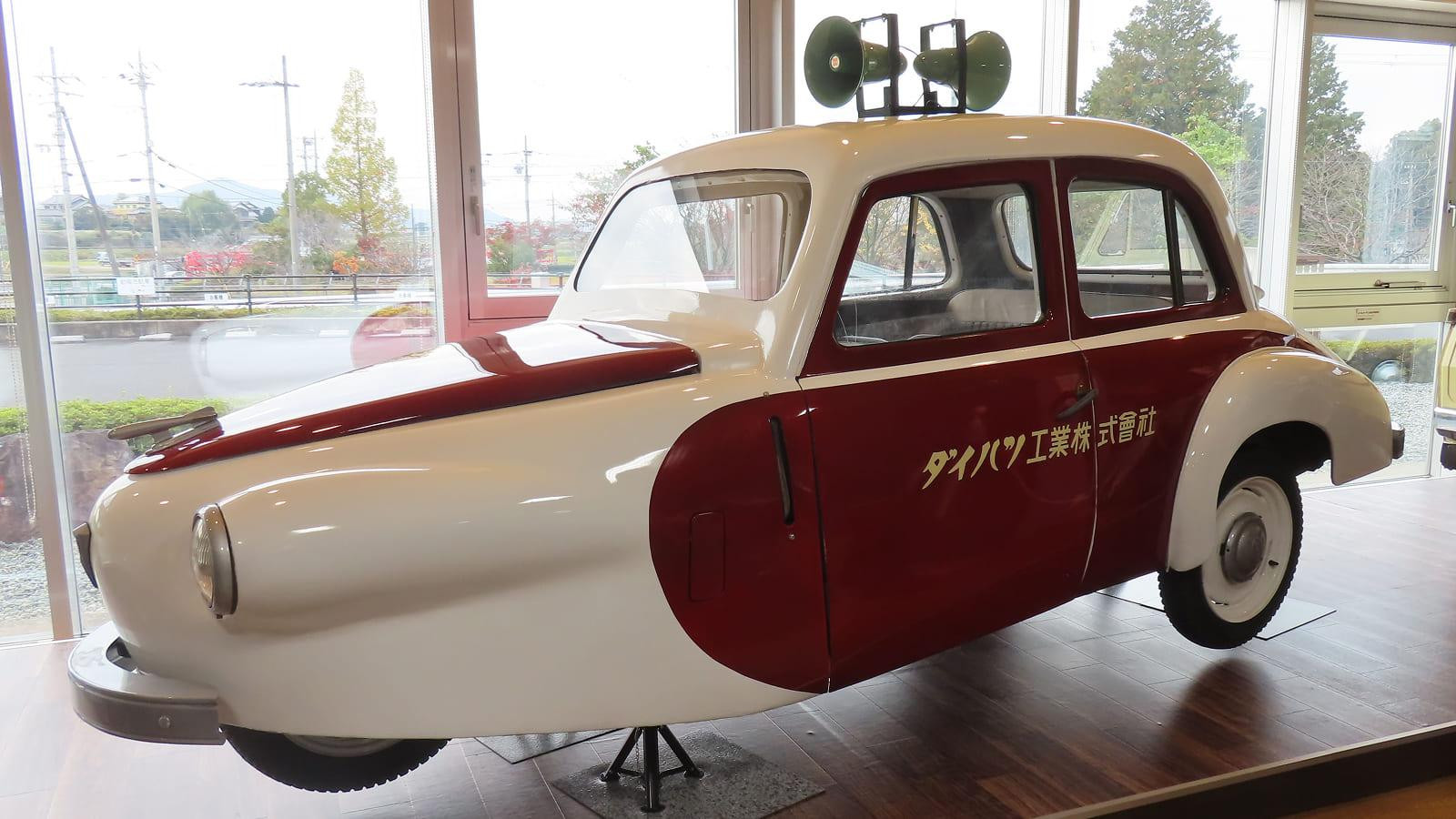
During the investigation into the BEE owned by KAWAMURA-KAKO, attention was drawn to the unique paint design on its outer panels.
Upon examining internal documents, an interesting fact came to light…
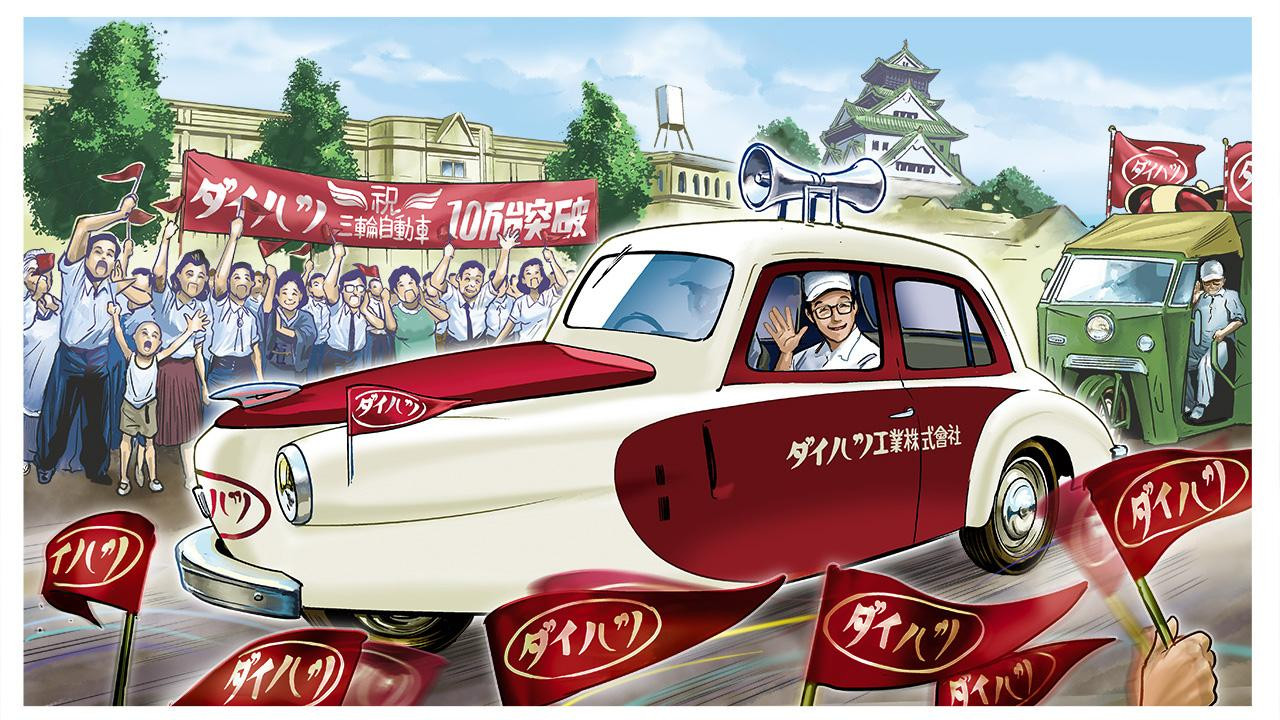
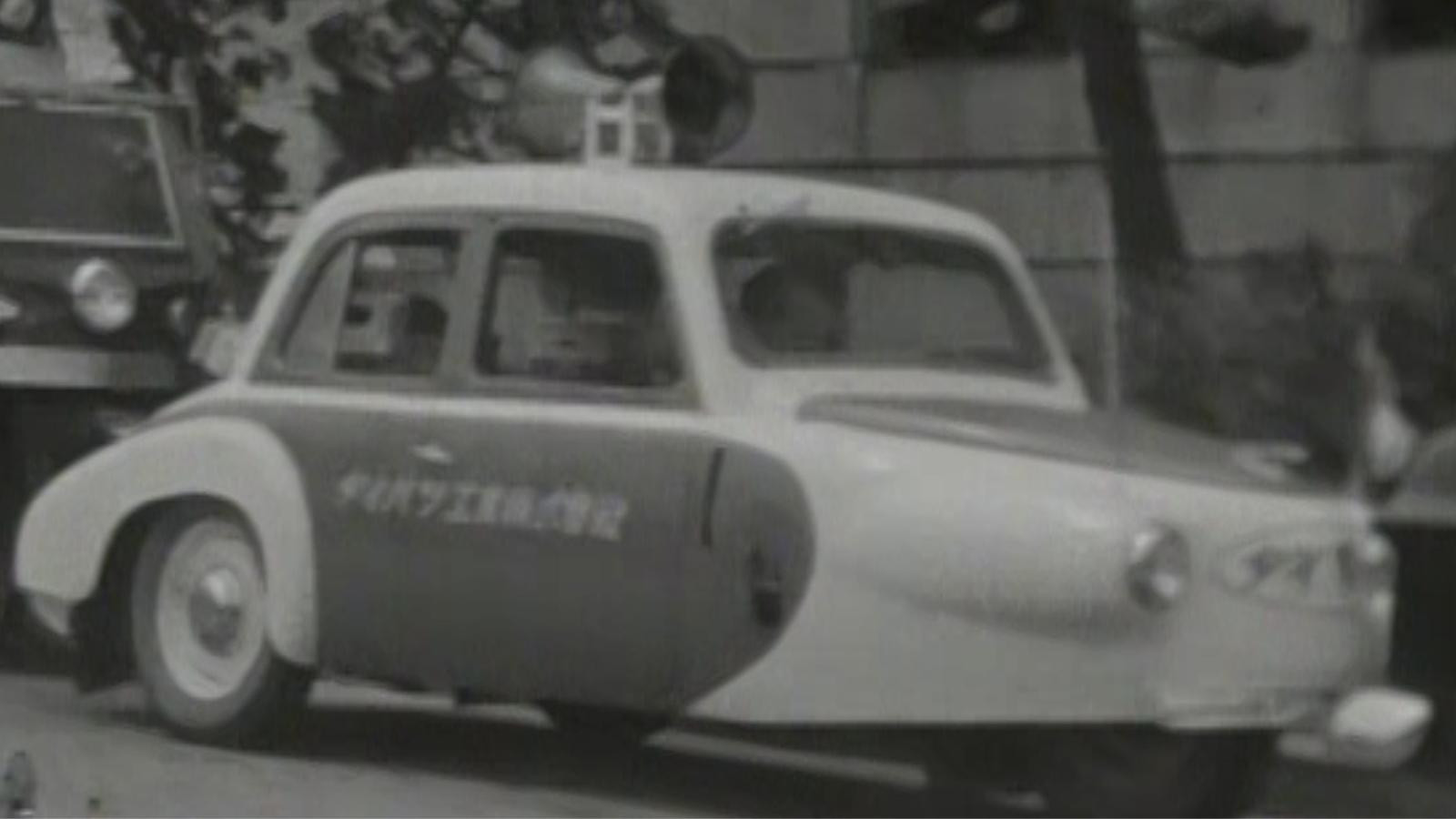
This particular vehicle served as the lead car in the convoy during Daihatsu’s Japan-wide caravan commemorating the production of 100,000 three-wheeled vehicles.
It was this BEE that led the way for the people welcoming the caravan in each location.
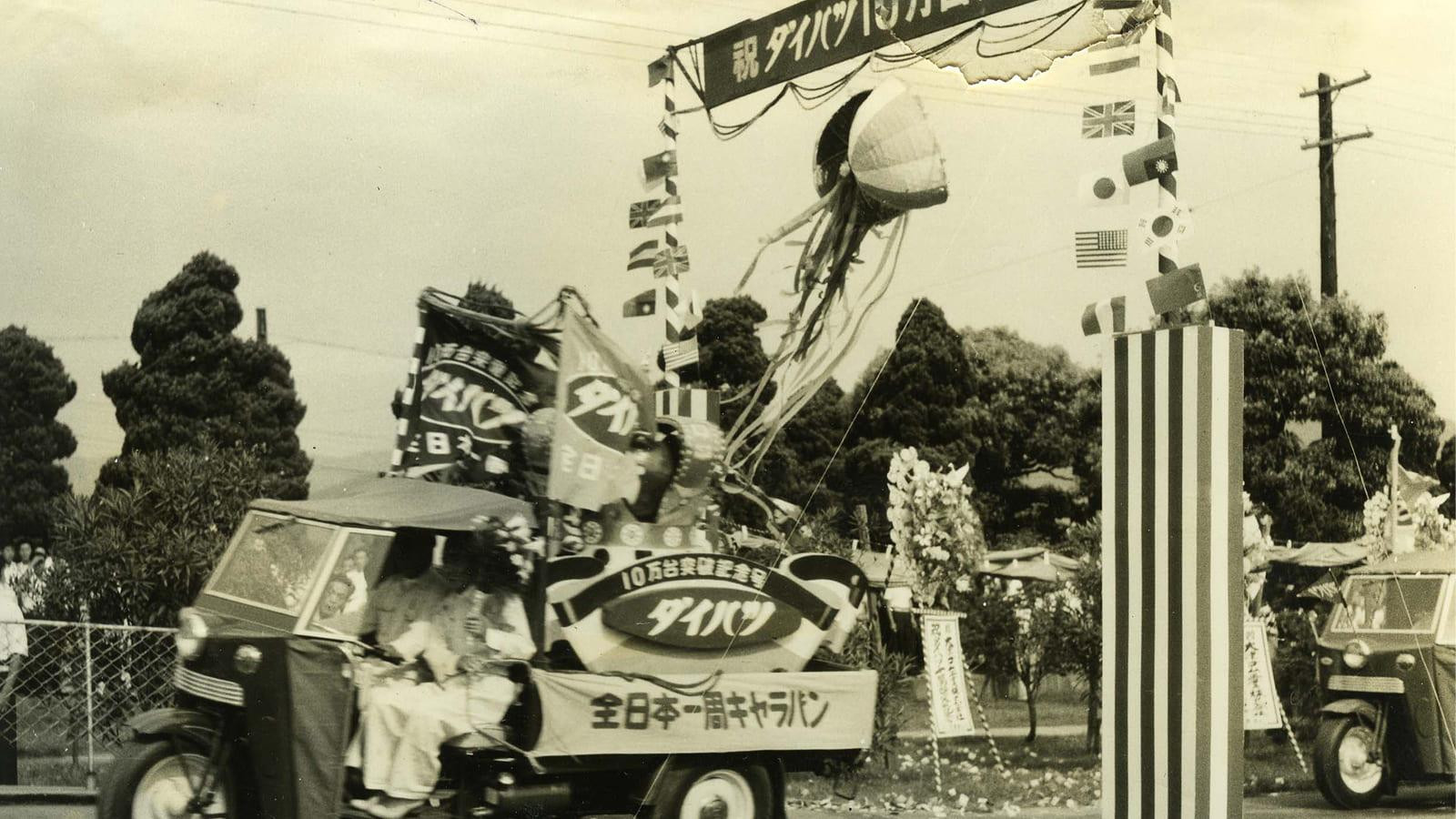
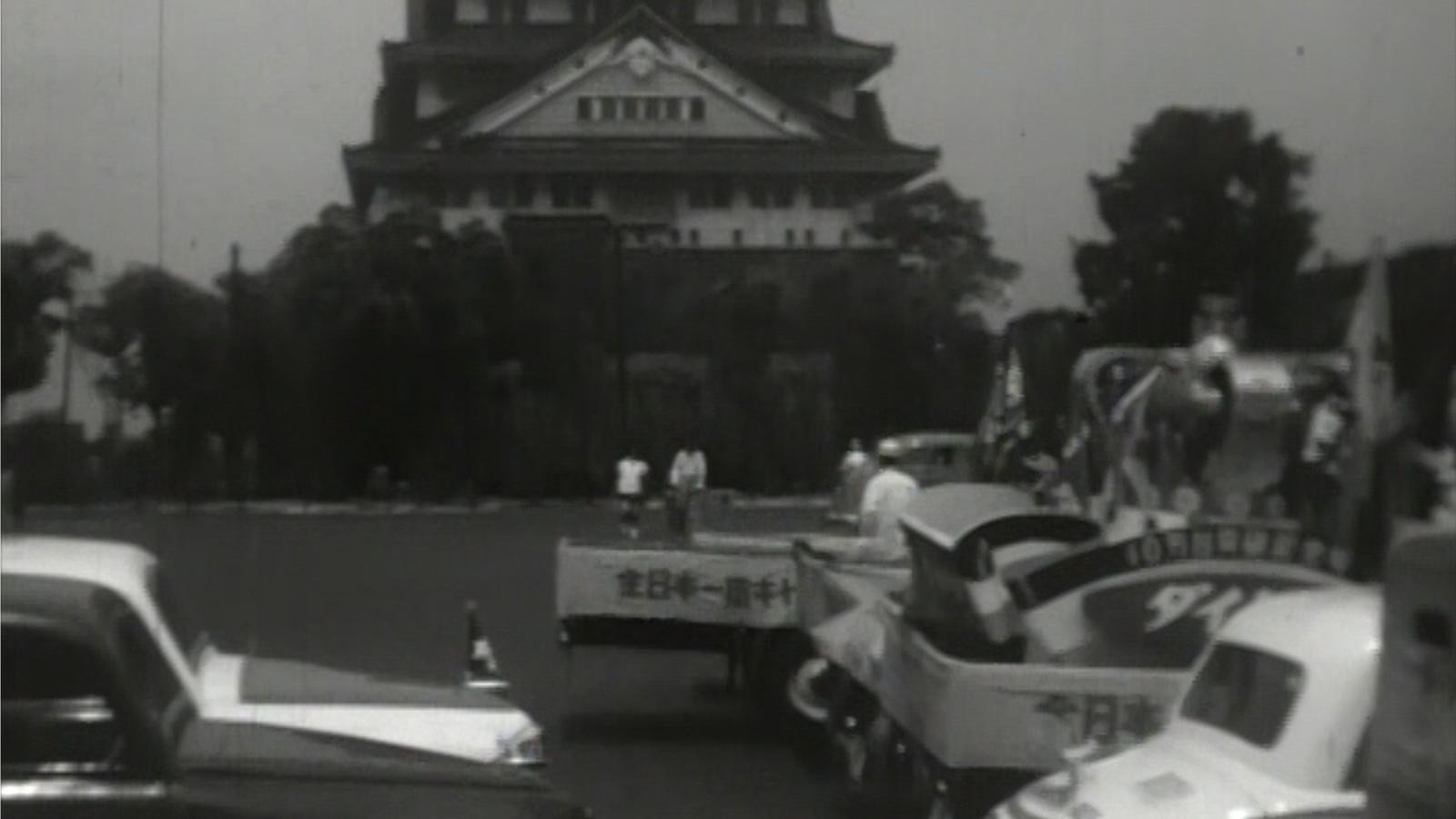
Retaining the Color Scheme from the Japan Tour During Restoration Without Any Modifications
Compared to images from the nationwide tour, the BEE owned by KAWAMURA-KAKO reproduces its original color scheme. This choice reflects the intention to “preserve the history of the Japan tour” during its restoration.
The BEE embodies the spirit of challenge of its developers and the cherished passions inherited from subsequent owners. Given this background, surviving examples are not merely “old cars” but precious cultural assets in which Daihatsu’s history is embedded.
<Comparison image of the BEE that toured nationwide and the BEE currently owned by KAWAMURA-KAKO>
Weaving the Value of Bonds into the Future
The BEE is more than just a rare car.
“It is a car forged by bonds—connections between people, connections across eras, and connections between passions,” states Chairman Kawamura. “Be it MONODUKURI or work, what ultimately sustains it all is human connections. I want people to sense that value.”
While covering the story about BEE, we truly felt it wasn’t just a valuable car, but a car preserved by human connections. The more we learned about the passions of its successive owners, the more we sensed that MONODUKURI isn’t just about technology—it’s something that is connected by people.
The Daihatsu TANKENTAI will continue its real explorations carrying this spirit in their hearts.
Stay tuned for the next article!
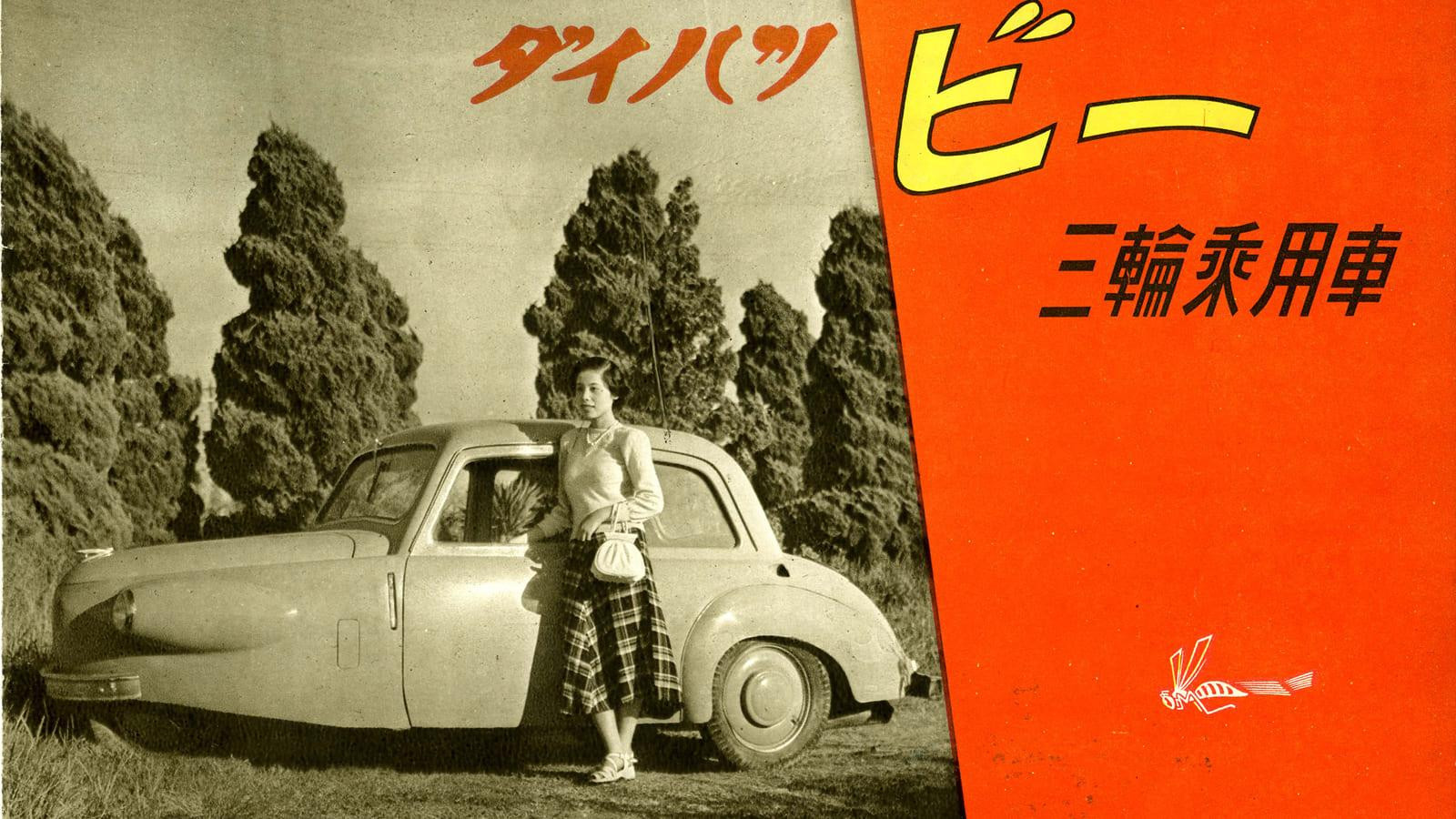
■Appendix 1: Catalog
■Appendix 2: Record footage commemorating the production of 100,000 Daihatsu three-wheeled vehicles (short version, approx. 6 min. with no audio)
■Appendix 3: Record footage commemorating the production of 100,000 Daihatsu three-wheeled vehicles (uncut version, approx. 30 min. with no audio)

This was Daihatsu-TANKENTAI (Explorers)~
We’ll be introducing more and more of Daihatsu’s “Because it’s small, you can do it all” spirit, so please look forward to it!
Here’s the link to Daihatsu-TANKENTAI (Explorers)~
Related links
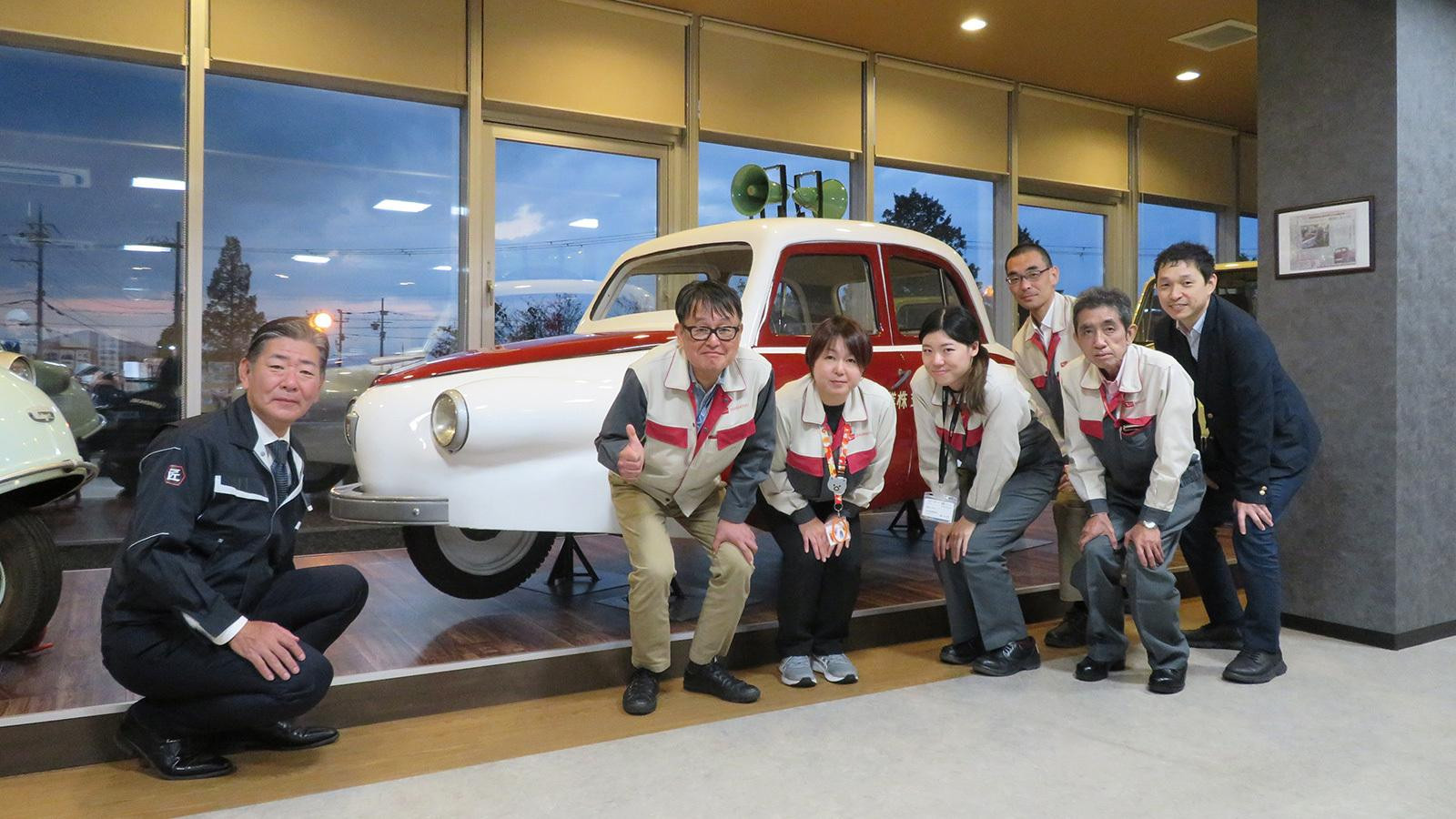
The people in this article
KAWAMURA-KAKO CO., LTD.
Kawamura
Daihatsu TANKENTAI leader
Iwamura (Brand Promotion Dept.)
Daihatsu TANKENTAI
Fujiwara (TAR Production Engineering Div.)
Daihatsu TANKENTAI
Kawakita (General Affairs Dept.)

Daihatsu TANKENTAI
Saito (Value Chain Business Div.)

Daihatsu TANKENTAI
Wakabayashi (Vehicle Structure & Function Development Div.)

Daihatsu TANKENTAI
Ema (Distribution Planning Div.)
Daihatsu TANKENTAI
Tanaka (Power Train Production Engineering Div.)

Daihatsu TANKENTAI
Ishida (Corporate Planning Dept.)